PHILIPPINES, JAPAN, US HOLD JOINT DRILL NEAR TAIWAN WATERS
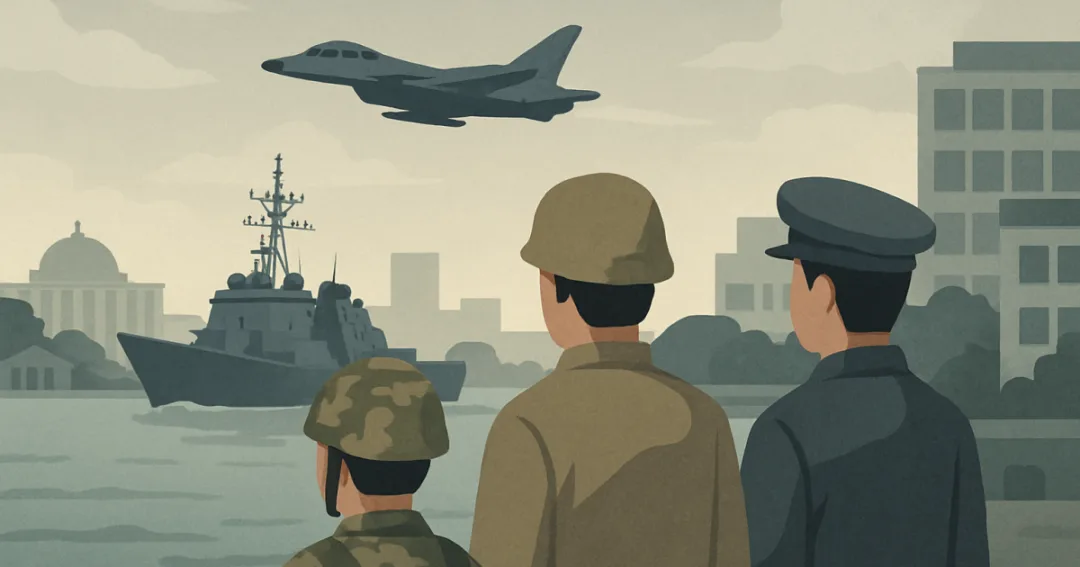
The recent joint naval and air drill conducted by the Philippines, Japan, and the United States near waters close to Taiwan underscores how regional security dynamics in East Asia are evolving in visible and coordinated ways. While such exercises are framed as routine and defensive, their location and timing inevitably carry political and strategic meaning. Taiwan sits at the intersection of major sea lanes, contested territorial claims, and competing visions of regional order, making any military activity in its vicinity a matter of heightened scrutiny. For Manila, Tokyo, and Washington, the drill signals a shared concern for freedom of navigation and the stability of maritime routes that sustain their economies. For observers, it is also a reminder that the security of the region is increasingly being managed through overlapping partnerships rather than isolated national efforts.
Historically, the security architecture of East Asia has been shaped by bilateral alliances centered on the United States, especially with Japan and the Philippines. Over time, these relationships have expanded into more networked arrangements, reflecting a perception that regional challenges are too complex for any single country to address alone. Japan has been gradually assuming a more proactive security role within the bounds of its legal framework, emphasizing cooperation and capacity-building. The Philippines, meanwhile, has oscillated in its external alignments but has recently moved to deepen defense ties with long-standing partners amid concerns over maritime incidents. The joint drill with the United States, a traditional security guarantor in the region, thus fits into a broader pattern of alliance adaptation rather than an abrupt departure from past practice.
The choice of operating near Taiwan’s surrounding waters inevitably raises questions about how such activities will be interpreted by other regional actors, particularly those wary of perceived encirclement or containment. Military exercises, even when described as routine, can be read as messages of deterrence or reassurance depending on the vantage point. This dual character is part of what makes them both useful and risky tools of statecraft. On one hand, they demonstrate preparedness, interoperability, and a willingness to uphold stated principles such as the peaceful use of sea lanes. On the other, they can contribute to a climate of suspicion if not accompanied by clear communication and parallel diplomatic efforts.
For the broader public, the relevance of these developments may not lie in the technical details of maneuvers but in what they suggest about the trajectory of regional peace and economic security. East Asia’s prosperity depends heavily on stable maritime trade, predictable rules, and the avoidance of miscalculation. Joint drills can enhance coordination in areas such as disaster response, search and rescue, and maritime safety, which have direct humanitarian and commercial benefits. Yet they also highlight how closely tied civilian well-being is to the management of geopolitical tensions. Citizens, businesses, and civil society groups have an interest in encouraging transparency, adherence to international norms, and mechanisms that prevent incidents at sea from escalating into broader crises.
Looking ahead, the challenge for all parties in the region is to balance necessary security cooperation with a sustained commitment to dialogue and restraint. Exercises like the one involving the Philippines, Japan, and the United States will likely continue as part of an evolving security landscape, but their impact will depend on the broader context in which they occur. If combined with inclusive regional forums, confidence-building measures, and practical cooperation on non-military issues, they need not be seen as steps toward confrontation. Instead, they can be one component of a more resilient, rules-based order that leaves room for competition without tipping into conflict. The real test will be whether regional actors can