BASTE DUTERTE SWORN IN AS DAVAO MAYOR
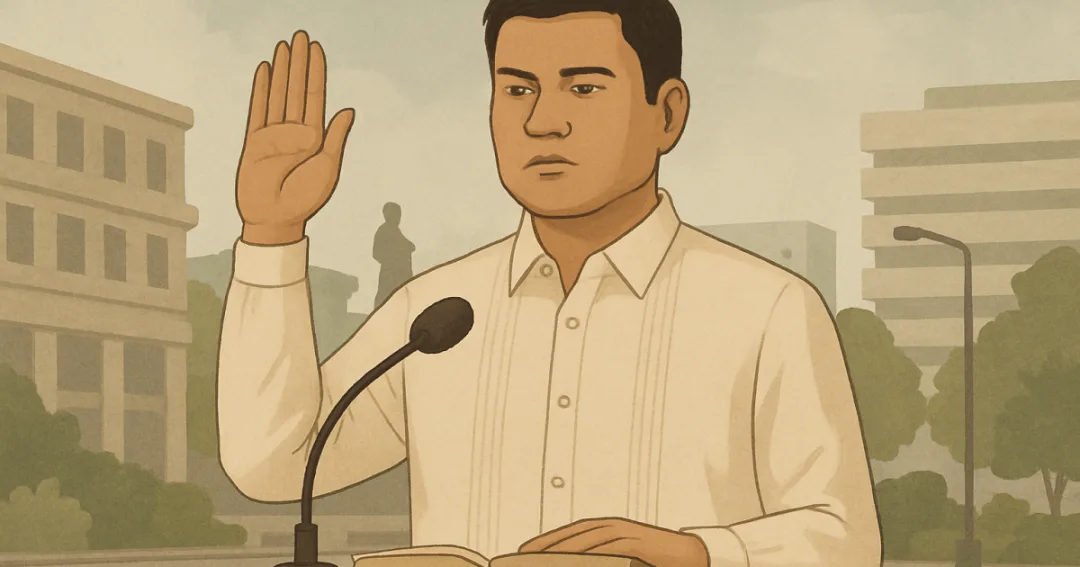
The formal assumption of office by Sebastian “Baste” Duterte as mayor of Davao City marks another chapter in a political narrative that has shaped the city for decades. His swearing-in is more than a ceremonial transfer of authority; it signals continuity in a local leadership style that has become nationally recognizable. For residents, the event carries practical implications: it determines who will steer priorities in areas such as basic services, urban planning, and public safety. For observers outside Davao, it offers a window into how political families maintain influence and how local electorates assess performance, reputation, and legacy when casting their votes.
Davao City has long been associated with the Duterte name, and this association has brought both visibility and scrutiny. Supporters often cite relative orderliness and a sense of stability as outcomes of long-running leadership, while critics raise concerns about the risks of concentration of power. The installation of another Duterte in the city’s highest local post reinforces the perception of a political dynasty, a pattern that is neither unique to Davao nor to one political camp. Across the country, family-based politics remain common, reflecting a mixture of voter trust, brand recognition, and structural weaknesses in party development. The Davao experience thus becomes part of a broader conversation on how leadership is renewed—or recycled—in local democracies.
The new mayor inherits a city that has expanded economically and demographically, bringing both opportunities and pressures. Governance now must address familiar challenges in a more complex environment: managing traffic and urban congestion, ensuring inclusive growth, and maintaining public order without sacrificing rights and due process. The expectations on any new local chief executive, particularly one bearing a prominent surname, are significant. Residents will look not only for continuity in what they believe has worked, but also for adaptation to new realities, including digital governance, environmental resilience, and social protection. How effectively the administration balances firmness with transparency and accountability will shape public confidence.
Nationally, the transition in Davao invites reflection on the relationship between local strongholds and the wider political system. Local leaders with entrenched support bases can serve as power brokers, shaping alliances and influencing discourse beyond their jurisdictions. At the same time, the durability of such strongholds raises questions about the health of pluralism and competition at the local level. Institutions—electoral bodies, oversight agencies, civil society, and the media—play a crucial role in ensuring that long-serving political families are subject to the same standards of scrutiny as any other officials. The quality of local democracy depends less on surnames and more on whether checks and balances function in practice.
As Baste Duterte begins his term as mayor, the more meaningful test lies not in ceremony, but in governance over the coming years. Voters, regardless of their views on the Duterte legacy, have a stake in policies that are predictable, lawful, and responsive to everyday concerns. Davao’s trajectory under its new mayor will contribute to the ongoing debate about whether entrenched political families can evolve into more institutional, program-based leadership. Ultimately, the city’s experience may either reinforce or challenge assumptions about dynastic politics in the Philippines. For now, the task before the new mayor is straightforward in principle but demanding in execution: to govern in a way that justifies public trust, withstands institutional scrutiny, and serves as a credible model for local leadership in a changing nation.