GREEN APPROACHES PUSHED TO ADDRESS DAVAO’S GARBAGE DISPOSAL
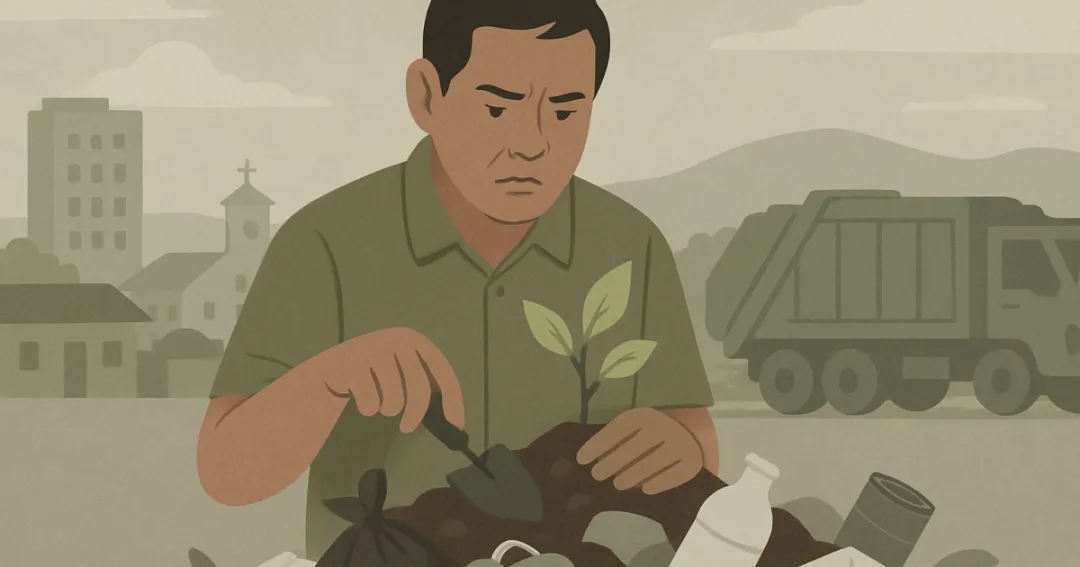
Efforts to promote greener approaches to garbage disposal in Davao highlight a challenge facing many fast-growing cities: how to reconcile rapid urbanization with sustainable waste management. As populations expand and consumption patterns change, volumes of household, commercial, and industrial waste inevitably rise. Traditional reliance on landfills and open dumpsites, even when regulated, strains available land and risks long-term environmental damage. For a city that positions itself as relatively orderly and livable, the question is no longer whether to change its waste practices, but how quickly and how fairly that transition can be made.
The push for greener methods is not occurring in a vacuum. Around the world, local governments have been encouraged to adopt waste reduction, segregation at source, recycling, and composting as core strategies, rather than treating disposal as the end of the line. In the Philippines, national policies have long promoted ecological solid waste management, but implementation has often lagged due to limited resources, inconsistent enforcement, and public habits that are slow to shift. Davao’s current initiatives are therefore part of a broader, gradual evolution from a “collect-and-dump” mindset toward a more circular approach that aims to recover value from what was once seen as mere trash. This transition is complex, but it is also a measure of how seriously a city takes its environmental responsibilities.
At the heart of greener garbage disposal is the principle that waste should be minimized before it is managed. That means encouraging households and businesses to reduce single-use packaging, to separate biodegradable from non-biodegradable materials, and to support recycling channels where they exist. It also means recognizing that waste is not just an environmental issue but a social and economic one: informal waste pickers, small recycling enterprises, and community-based initiatives all play roles that can be either supported or undermined by new policies. When institutions promote green approaches without considering livelihoods and social equity, resistance and non-compliance are likely. Conversely, when stakeholders are consulted and programs are phased in thoughtfully, the chances of lasting behavioral change improve.
The implications of Davao’s choices extend beyond municipal boundaries. Cities that manage to reduce landfill dependence, prevent plastic leakage into waterways, and cut greenhouse gas emissions from waste set a useful example for other urban centers grappling with similar issues. Green approaches also intersect with public health, tourism, and disaster resilience: cleaner surroundings reduce disease risks, improve the city’s image, and lessen the likelihood that clogged drainage will worsen flooding. However, the benefits are not automatic. Without adequate infrastructure, consistent monitoring, and sustained public education, well-intentioned policies can become symbolic gestures rather than transformative practices.
Davao’s evolving strategy on garbage disposal is ultimately a test of long-term governance rather than short-term publicity. The city’s residents, businesses, and institutions will need to decide whether they are prepared to adjust daily habits, allocate resources, and accept new responsibilities in the name of a cleaner, more sustainable urban environment. Green approaches are rarely the cheapest or easiest in the beginning, but they tend to be less costly than dealing with polluted waterways, overburdened dumpsites, and degraded public spaces later on. If Davao can steadily align its regulations, infrastructure, and citizen behavior around ecological principles, it may not only address today’s waste problems but also help define what responsible urban stewardship looks like in the years ahead.