INTEGRAL ECOLOGY: THE INVISIBLE WASTES OF NONPOINT SOURCE POLLUTION
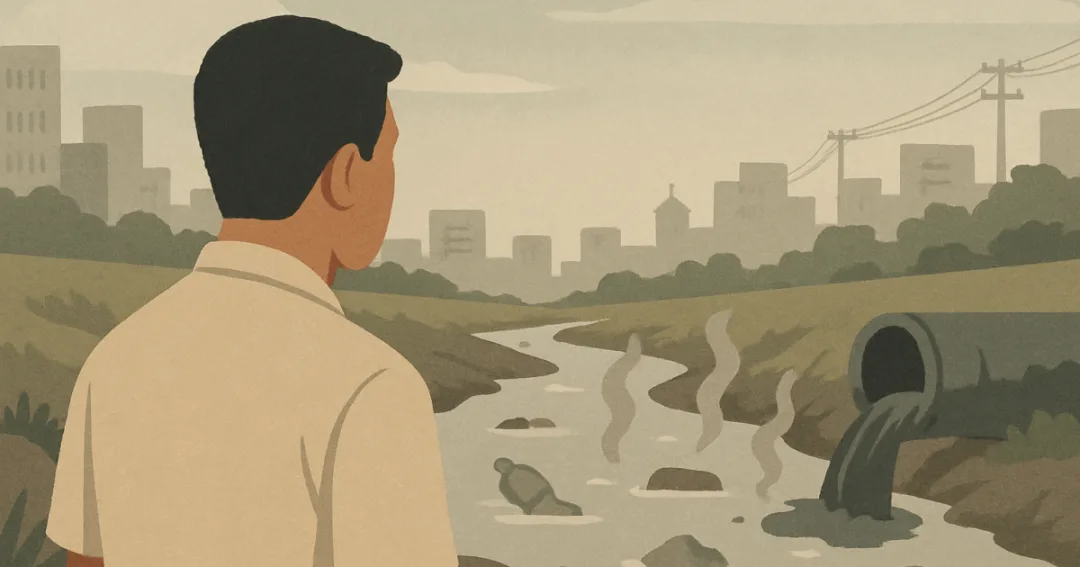
Integral ecology asks societies to see the world as an interconnected whole, where environmental, social, and economic systems cannot be separated. Nowhere is this more urgently needed than in the case of nonpoint source pollution—the diffuse runoff of fertilizers, chemicals, plastics, and waste that seeps from farms, roads, and urban areas into rivers, coasts, and groundwater. Unlike pollution from a single factory or pipe, nonpoint source pollution is largely invisible in daily life and difficult to attribute to any one actor. Yet it accumulates quietly in waterways and soils, often far from where it originated, blurring the line between individual responsibility and collective consequence. This invisibility makes it easy to ignore, even as it undermines the ecological foundations on which communities depend.
Historically, environmental regulation and public concern have focused on obvious sources of contamination: smokestacks, industrial discharges, overflowing landfills. These point sources were easier to identify, monitor, and regulate, and their control did lead to important improvements in air and water quality in many places. However, as those visible emissions were reduced, the relative importance of diffuse pollution became clearer. Runoff from agricultural lands, residues from household products, microplastics from daily consumption, and oil from countless vehicles now form a complex, low-level but persistent background of contamination. This shift reveals a deeper challenge: the most significant environmental pressures are no longer just industrial accidents or isolated violations, but the ordinary, routine functioning of modern life.
From an integral ecology perspective, nonpoint source pollution is not merely a technical problem but a symptom of fragmented thinking. It exposes how decisions in agriculture, transport, housing, and consumer behavior are often made in isolation from their ecological consequences. A farmer choosing a fertilizer, a household disposing of cleaning agents, a city planning its drainage systems—all participate in a web of cause and effect that crosses sectors and jurisdictions. Yet institutions and policies are frequently organized in silos, each addressing a narrow mandate without fully accounting for cumulative impacts. The result is a diffuse environmental debt that is difficult to measure, assign, or repay, but that still must be borne by ecosystems and communities.
The implications for public life are significant. Nonpoint source pollution challenges conventional ideas of accountability, because responsibility is shared among many small contributors rather than a few large polluters. It also complicates questions of fairness: those who suffer degraded water quality or damaged ecosystems are not always those who benefited most from the activities that caused the harm. Addressing this requires more than stricter rules; it calls for changes in land use planning, incentives for more sustainable practices, and public awareness that links everyday choices to long-term ecological health. Education, research, and community engagement become as crucial as enforcement, because prevention depends on reshaping habits across entire societies.
Looking ahead, the concept of integral ecology offers a useful compass for dealing with these invisible wastes. It encourages policymakers, businesses, and citizens to see environmental quality not as a separate issue but as woven into food systems, economic planning, infrastructure design, and cultural values. Efforts to reduce nonpoint source pollution will likely be incremental and dispersed, but they can be guided by a consistent principle: that no sector or activity stands outside the ecological fabric. Recognizing this interconnectedness does not provide easy solutions, but it clarifies the direction of travel. As societies confront the quiet but pervasive burdens of diffuse pollution, the task is not only to clean what has already been contaminated, but