JOEL EMBIID
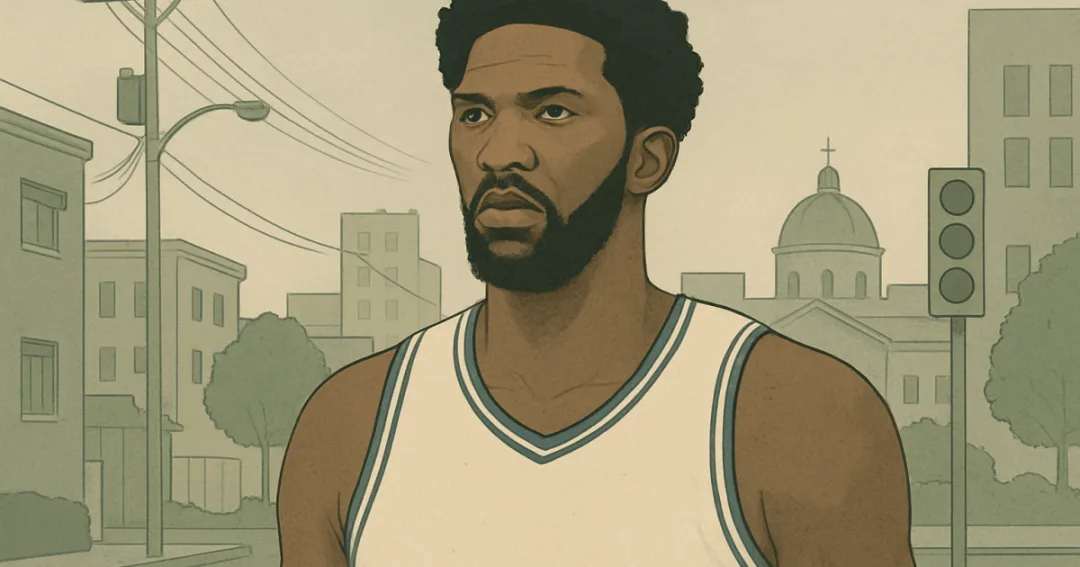
Joel Embiid’s career has unfolded as a study in contrasts: dominant yet fragile, charismatic yet polarizing, immensely talented yet frequently unavailable. As one of the most gifted centers of his generation, he has reshaped expectations for what a modern big man can do, stretching the floor, anchoring defenses, and serving as the offensive focal point of a contending team. At the same time, his recurring injuries and postseason frustrations have raised questions about durability, conditioning, and the sustainability of building a franchise around a single star with such a demanding physical profile. The debate around Embiid is not simply about one player’s legacy; it reflects a broader tension in contemporary basketball between potential and reliability. How the league, its teams, and its fans judge Embiid’s trajectory will influence how future stars at his position are evaluated and developed.
To understand Embiid’s significance, it helps to recall how the center position has evolved. For decades, dominant big men were defined by physicality near the basket, rebounding, and rim protection, with limited expectation to create offense from the perimeter. Embiid arrived in the NBA as the league was moving toward pace, space, and three-point reported situation, and he adapted by adding range, ball-handling, and playmaking to a traditional interior skill set. This hybrid style has allowed him to exploit mismatches, drawing defenders out of the paint while still punishing opponents inside. In doing so, he has become a prototype for the multifaceted center, influencing how young big men are trained and scouted across basketball ecosystems.
Yet Embiid’s story is also inseparable from the realities of modern sports medicine and load management. His early years were marked by serious injuries, and even as he matured into an elite performer, extended absences have remained a recurring theme. This pattern underscores a central challenge in professional sports: how to balance short-term competitiveness with long-term health. Teams and medical staffs are under pressure to keep stars on the court, while also preserving careers that can be shortened by overuse. Embiid’s periodic unavailability forces his team to constantly adjust strategies and lineups, highlighting how dependent some franchises have become on a single high-usage player.
The public conversation around Embiid often centers on postseason outcomes, where narratives harden quickly. When he excels, he is seen as a transformative talent capable of carrying a team deep into the playoffs; when he struggles or is sidelined, critiques about conditioning, mentality, or style of play intensify. This tendency illustrates how individual stars in basketball are subjected to an outsized share of blame or praise, even though playoff results are shaped by coaching, roster construction, matchups, and sheer luck. In Embiid’s case, the scrutiny is heightened by expectations that come with individual accolades and regular-season dominance. The gap between what he has already accomplished and what many believe he should achieve remains a focal point of discussion among analysts and fans.
Looking ahead, Embiid’s legacy will likely hinge less on regular-season statistics and more on how he and his team navigate the twin demands of health and high stakes. If he can remain available and productive in the most important games, he has the tools to redefine what success looks like for a modern center and to validate the organizational choices built around him. If injuries continue to interrupt his seasons, he may be remembered as a brilliant but incomplete figure in an era defined by versatility and durability. For the broader basketball community, his journey is