777
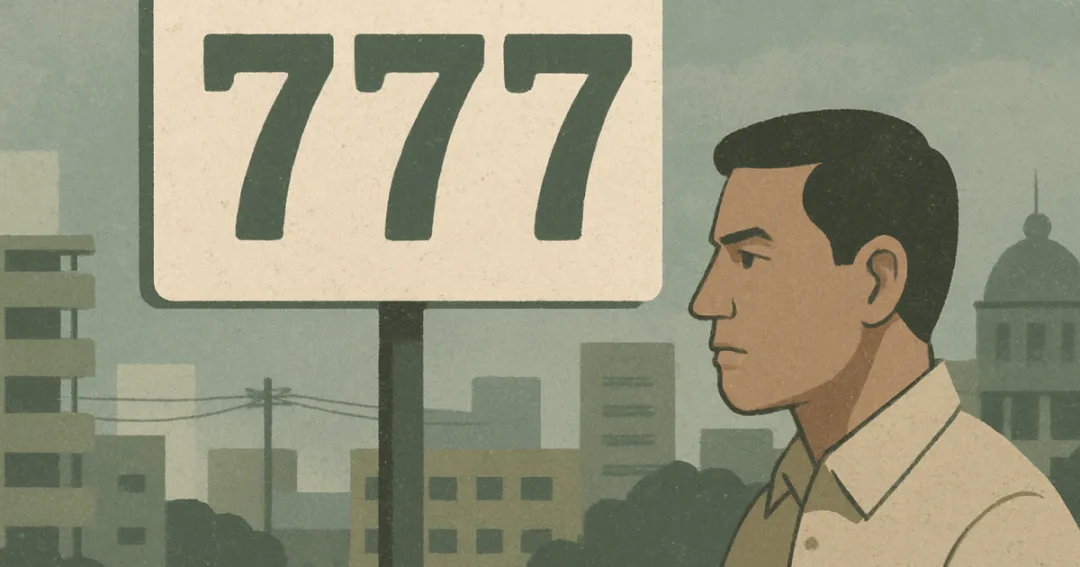
The sequence “777” appears simple at first glance, yet its persistence across cultures, markets, and media reveals how humans invest numbers with meaning far beyond arithmetic. It surfaces in religious symbolism, in gambling halls, in marketing campaigns, and in casual digital culture. In each setting, it carries a slightly different shade of significance, ranging from spiritual completeness to sheer luck to clever branding. This layered presence invites a closer look at why such a number matters at all in modern life. Understanding how “777” functions in our collective imagination offers insight into how societies construct meaning, manage uncertainty, and negotiate the boundary between rationality and belief.
Historically, certain numbers have been assigned symbolic weight, and “7” is among the most prominent. Its recurrence in religious texts, traditional stories, and cultural practices has long associated it with ideas of completeness, order, or divine favor. When the digit is tripled into “777,” the symbolic effect is often perceived as intensified, even if the logic is more emotional than mathematical. Over time, this layered symbolism has migrated from sacred or literary contexts into more secular domains. The persistence of “777” in contemporary settings suggests that even as societies embrace data and technology, older patterns of number mysticism remain surprisingly resilient.
One of the most visible modern incarnations of “777” is in the realm of chance and entertainment. In gambling environments, the number has become shorthand for a winning outcome, a distilled image of sudden fortune. Its prominence on slot machines and promotional materials reflects how industries capitalize on existing cultural associations to reinforce feelings of excitement and possibility. This does not necessarily change the underlying probabilities, but it shapes the emotional experience of participants. The number becomes a symbol that bridges the rational understanding of risk with the human desire for narrative and destiny.
Beyond entertainment, “777” has also been repurposed in branding, digital culture, and personal expression. Companies and individuals adopt the number in usernames, product labels, and visual identities to suggest luck, positivity, or distinction. In online spaces, it can function as a signal of affiliation, aspiration, or simply aesthetic preference. This flexible use underscores how symbolic numbers can be detached from their original religious or mystical roots and repackaged for contemporary consumption. Yet the underlying impulse is similar: to anchor one’s identity or offering in something that feels larger, more meaningful, or more auspicious than everyday randomness.
The enduring appeal of “777” reminds us that even in data-driven societies, people seek patterns that offer comfort, hope, or a sense of order. Institutions that deal with risk, communication, or public trust may benefit from recognizing how such symbols influence perception and behavior, without overstating their power or endorsing superstition. As technology continues to quantify ever more aspects of life, the coexistence of numerical precision and numerical symbolism will likely persist. The challenge is not to eliminate these cultural meanings, but to understand them clearly and use them responsibly. In doing so, societies can acknowledge the human need for symbols like “777” while still grounding decisions in evidence and reason.