OIL SHOCK TO CREATE ‘NEW POOR’ IN PHILIPPINES
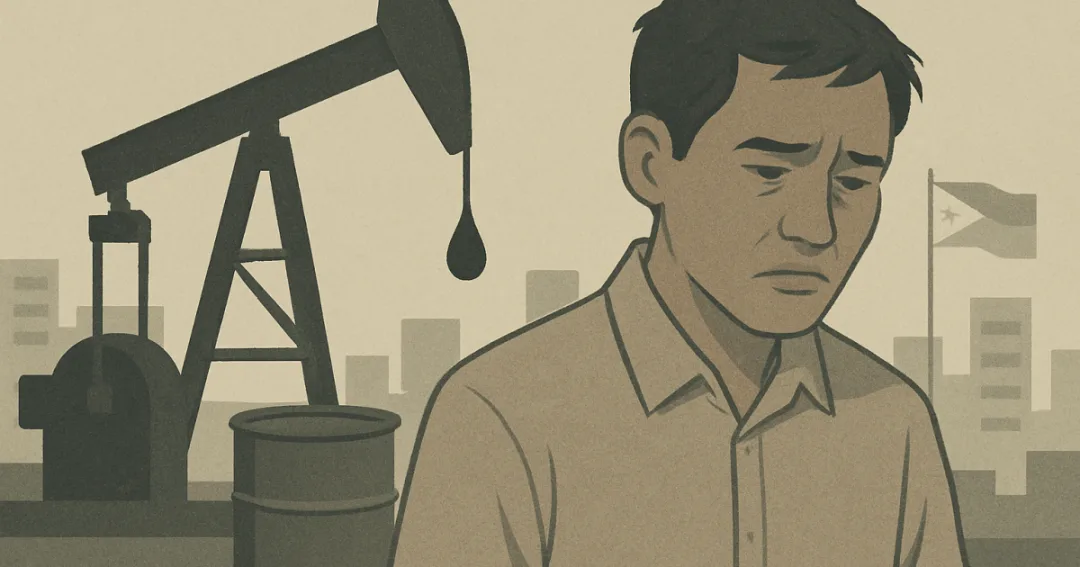
Oil price spikes are often discussed in terms of global markets and geopolitical tensions, but their most immediate impact is felt in households that can least afford another blow to their budgets. In the Philippines, where many families already live close to the edge, a sustained rise in fuel costs risks creating a “new poor”: people who were previously managing to stay afloat but are now being pushed into hardship. These are the tricycle drivers whose daily fuel expenses suddenly swallow their earnings, the small vendors paying more to transport goods, and the office workers whose commuting costs quietly erode their take-home pay. When fuel becomes more expensive, it acts like a silent tax on participation in the economy, especially in a country where public transport and logistics are still heavily dependent on oil. The issue matters not only because it affects basic affordability, but because it can subtly redraw the social map, expanding the ranks of the vulnerable without dramatic headlines.
The Philippines has experienced oil shocks before, and each episode has exposed familiar structural weaknesses. A high dependence on imported fuel, combined with limited mass transit options and road congestion, means that increases in global oil prices quickly filter down to transport fares and the cost of moving goods. In the past, temporary relief measures and subsidies have been used to cushion the blow, but these have rarely altered the underlying exposure to external price swings. Economic growth over recent years has lifted many households just above the poverty line, yet their resilience to sudden cost increases remains fragile. This history suggests that without deeper reforms, each new oil shock risks undoing years of incremental progress in poverty reduction.
The emergence of a “new poor” is not only about those who cross an official income threshold; it is also about those whose quality of life deteriorates in ways that are harder to measure. Families may respond to higher transport and food costs by cutting back on health care, education, or nutrition, choices that have long-term consequences. Informal workers who rely on daily mobility may take fewer jobs because travel becomes too expensive or time-consuming. Urban residents might find that a larger share of their income goes to commuting, leaving less for savings or small investments that could improve their prospects. Over time, such adjustments can entrench a cycle in which people are technically not counted as poor, but are functionally stuck in a state of chronic insecurity.
The institutions tasked with responding to these pressures face a delicate balancing act. Short-term interventions, such as targeted assistance or fare controls, can help prevent immediate distress but may strain public finances or distort market signals if overused. Longer-term strategies, like improving public transport, diversifying energy sources, and encouraging more efficient use of fuel, require sustained political will and consistent implementation. Policy responses also need to be transparent and predictable to maintain public trust, especially when trade-offs are unavoidable. While no single measure can fully shield the population from global price volatility, a coherent mix of relief and reform can reduce the likelihood that a temporary oil shock becomes a permanent social setback.
Ultimately, the prospect of a “new poor” emerging from an oil shock is a reminder that economic vulnerability is not static; it shifts as conditions change and as societies adapt—or fail to adapt. The challenge for the Philippines is to treat this episode not only as a crisis to be managed, but as a signal to accelerate overdue changes in transport, energy, and social protection. If rising fuel prices merely trigger another round of short-lived palliatives, the country may find itself revisiting the same