OSASUNA VS BARCELONA
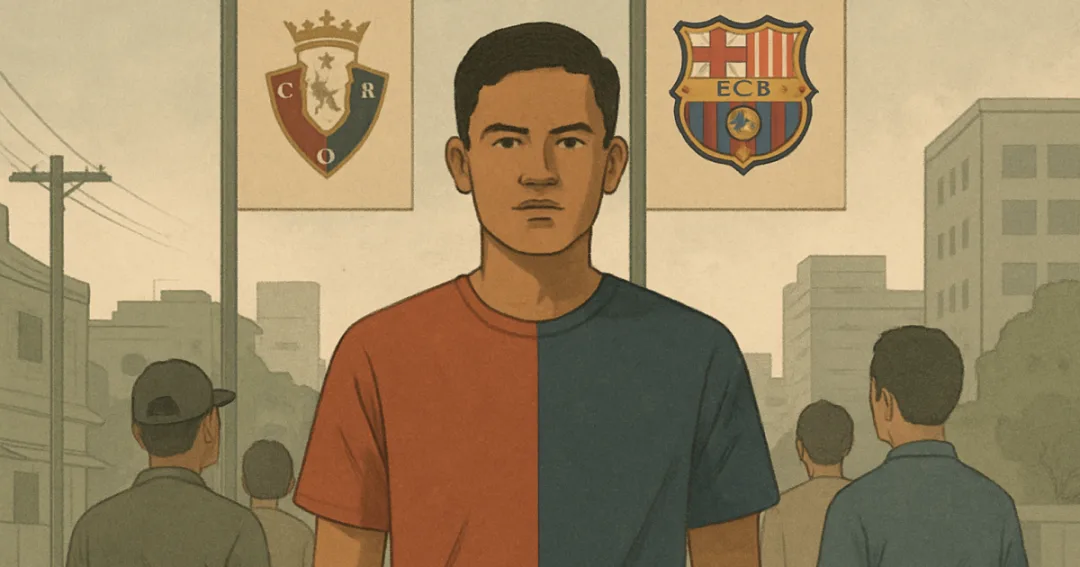
Osasuna versus Barcelona has become one of those fixtures that quietly reveals more than the league table alone can show. On the surface, it is a meeting between a modest, regionally rooted club and a global football brand, a routine stop in a long domestic campaign. Yet encounters like this illuminate how different visions of the game coexist within the same competition: one grounded in local identity and incremental growth, the other in global reach and constant scrutiny. They also expose how tactical evolution, financial realities and supporter expectations intersect on the pitch. For observers, this match-up is less about a single result and more about what it says regarding the changing balance of power and style in Spanish football.
Historically, Barcelona’s visits to Pamplona have rarely been straightforward, even when the talent gap has been obvious. Osasuna’s home environment, shaped by an intense but generally respectful fan culture, has long been associated with resilience and disciplined organisation. That contrast has often tested Barcelona teams built around possession, positional play and an expectation of dominance. Over time, as the league has grown more tactically sophisticated, Osasuna’s approach has mirrored a broader trend: mid-table clubs embracing structure, pressing and set-piece precision to reduce the gap with traditional giants. The result is a fixture that tends to challenge reputations rather than simply confirm them.
The broader context is that Spanish football is in a period of adjustment, both financially and competitively. Clubs with global profiles must now balance sporting ambition with stricter economic controls and heightened public scrutiny over spending and governance. For Barcelona, every league fixture, including one against Osasuna, becomes part of a longer story about rebuilding credibility, nurturing younger players and adapting their identity to new constraints. For Osasuna and similar clubs, such games are opportunities to consolidate their place in the top flight, attract attention to their project and demonstrate that careful planning can compete with star power. In this landscape, the gap between “giant” and “outsider” feels less predetermined than it once did.
From a tactical and sporting standpoint, the Osasuna–Barcelona clash also illustrates the evolving nature of La Liga itself. Matches between contrasting styles, one leaning on collective discipline and direct transitions, the other on ball circulation and territorial control, offer a kind of laboratory for modern football. Coaches must decide how much to respect tradition and how far to adjust to opponents who now study every tendency in granular detail. Supporters, meanwhile, are increasingly literate in these dynamics, discussing pressing structures and build-up patterns as readily as individual brilliance. The fixture thus contributes to a broader public understanding of the sport as a complex, strategic contest rather than just a showcase of famous names.
Looking ahead, the significance of Osasuna versus Barcelona is likely to grow rather than diminish. As financial disparities are debated and competitive balance becomes a recurring concern, fixtures like this will be used as reference points for how well the league is managing its own evolution. If matches remain tense, tactically rich and genuinely contestable, they will reinforce the idea that domestic football can still offer unpredictability and narrative depth. For both clubs, the encounter is a recurring test of identity: Osasuna’s commitment to sustainability and collective effort, and Barcelona’s attempt to reconcile heritage with modern constraints. For the wider audience, it serves as a reminder that the health of a league is often measured not only by its biggest derbies, but by how compelling its so-called routine fixtures have become.