PHILIPPINES MAY FACE NEW US TARIFFS
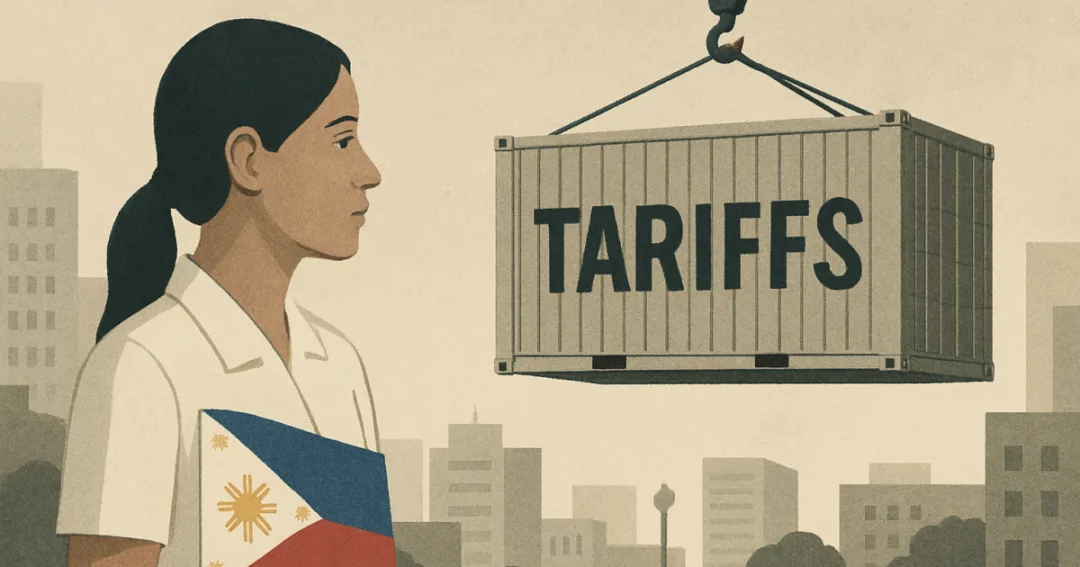
The prospect of new United States tariffs on Philippine exports comes at a delicate moment for both economies. While details remain limited, even the possibility of higher trade barriers can unsettle businesses that rely on predictable access to foreign markets. For the Philippines, the United States is a key destination for goods ranging from electronics to agricultural products and business-process services. Any disruption to these flows would reverberate through supply chains, employment, and foreign exchange earnings. For the United States, too, altering tariff treatment for a long-standing partner carries economic and diplomatic consequences that extend beyond a single policy cycle.
This development must be viewed against the broader backdrop of shifting global trade dynamics. Over the past decade, major economies have increasingly used tariffs and trade remedies as tools to address perceived imbalances, protect domestic industries, or advance strategic goals. The Philippines, like many mid-sized economies, is exposed to these shifts because it participates in global production networks without wielding great leverage over rule-making. Changes in US trade policy toward one sector can indirectly affect others, as investors reassess risk and governments recalibrate their own responses. The situation illustrates how deeply intertwined trade, industrial policy, and geopolitics have become.
For the Philippines, the implications of new US tariffs would likely be uneven across sectors. Exporters that operate on thin margins, especially in manufacturing and agriculture, may find it difficult to absorb higher costs without losing competitiveness. Larger firms integrated into multinational supply chains might have more room to adapt, but they, too, would confront pressure to relocate, automate, or diversify markets. Workers in export-oriented industries could face reduced hours, slower hiring, or wage stagnation if orders decline. The broader public, meanwhile, may feel the impact indirectly through slower growth, weaker currency performance, or constrained public revenues.
The potential policy response on both sides will be closely watched. In such situations, governments typically rely on established channels for dialogue, consultation, and, where applicable, dispute resolution. These processes are often slow and technical, but they serve an important purpose: to prevent trade frictions from escalating into broader confrontations. For Manila, the challenge will be to defend its economic interests while maintaining a constructive relationship with a key security and development partner. For Washington, any tariff move will be weighed not only against domestic political considerations but also against its stated interest in stable, resilient supply chains in the Indo-Pacific.
This moment could also be a catalyst for deeper reflection in the Philippines about long-term economic strategy. Greater diversification of export markets, upgrading of domestic industries, and investment in higher-value services can reduce vulnerability to abrupt policy shifts abroad. Strengthening institutions that support trade negotiation, data analysis, and stakeholder consultation would better equip the country for an era of more contested globalization. Ultimately, whether or not new US tariffs materialize, the episode underscores a broader lesson: in a world of fluid trade rules and strategic rivalry, resilience depends not on any single partnership, but on the capacity to adapt, negotiate, and plan beyond the next news cycle.