
PHILIPPINES TO PUSH FOR FOOD, ENERGY SECURITY IN ASEAN
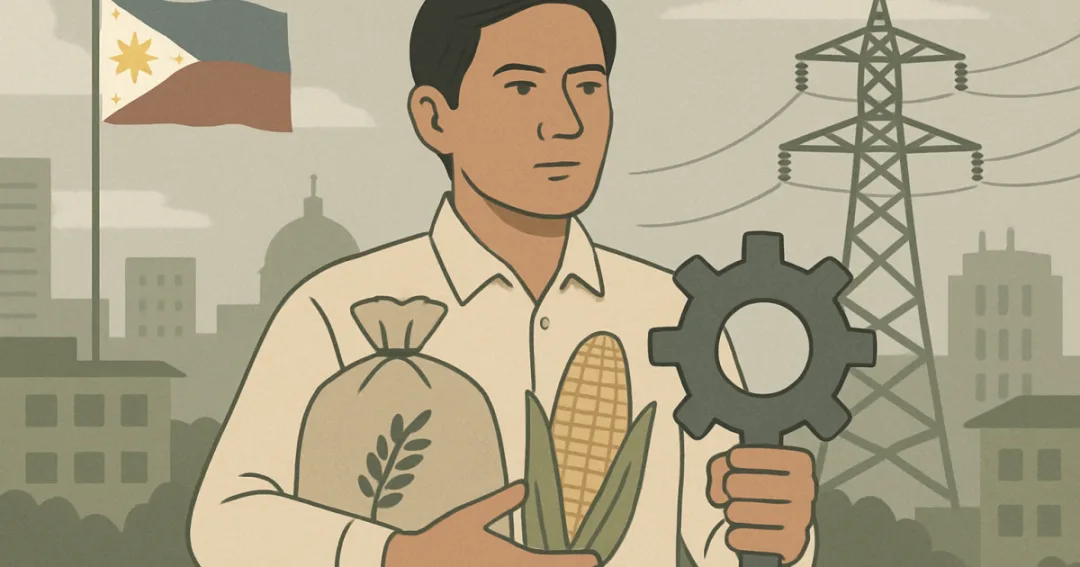
The Philippines’ decision to place food and energy security high on the agenda in regional discussions comes at a moment when vulnerabilities in both sectors are increasingly visible. Rising prices, climate-related disruptions, and geopolitical tensions have exposed how dependent many Southeast Asian economies are on external supplies and volatile markets. For a country with a large population and significant exposure to natural disasters, securing reliable access to food and power is not merely an economic concern but a social and political one. By pushing these issues within the Association of Southeast Asian Nations (ASEAN), Manila is acknowledging that solutions cannot be pursued in isolation and that regional cooperation is essential to resilience.
Food security has long been a sensitive topic across Southeast Asia, where agriculture remains a major source of livelihoods but is under pressure from urbanisation, environmental degradation, and changing weather patterns. The Philippines, like several of its neighbours, has grappled with fluctuating domestic production and reliance on imports for key staples. Periodic supply shocks and price spikes remind policymakers and the public that food systems are vulnerable to both local shortfalls and global market swings. Elevating food security in ASEAN discussions could encourage coordinated efforts on issues such as cross-border trade facilitation, shared research, and early warning mechanisms for supply disruptions.
Energy security presents a parallel challenge, with many ASEAN members seeking to balance growth, affordability, and sustainability. The Philippines, an archipelagic state with limited conventional energy resources, has long been exposed to external price movements and infrastructure constraints. At the same time, the region as a whole is under pressure to diversify energy sources, invest in cleaner technologies, and expand access to reliable power. A stronger regional focus on energy security could help countries pool expertise, align regulatory frameworks where feasible, and attract investment into interconnected and resilient energy systems.
The implications of a more assertive Philippine stance in ASEAN are significant but not necessarily confrontational. If framed constructively, this push can complement existing regional commitments and encourage a more practical, problem-solving orientation. Shared initiatives on food and energy could, for example, prioritise data-sharing, capacity-building, and contingency planning rather than grand, hard-to-implement schemes. By keeping the discussion grounded in common interests and incremental progress, ASEAN members may find it easier to navigate national sensitivities while still moving toward greater collective security.
Ultimately, the Philippines’ emphasis on food and energy security underscores a broader shift in regional priorities toward resilience and long-term stability. As ASEAN continues to evolve, its relevance will increasingly be measured by its ability to help member states manage cross-border risks that no country can address alone. Manila’s push will not resolve structural vulnerabilities overnight, but it can help steer regional attention toward the foundations of human and economic well-being. The measure of success will lie in whether these conversations translate into sustained cooperation, practical policies, and a shared recognition that security today is as much about reliable food and power as it is about traditional geopolitical concerns.


