WALANG PASOK: CLASS SUSPENSIONS FOR MAY 4 DUE TO MAYON UNREST
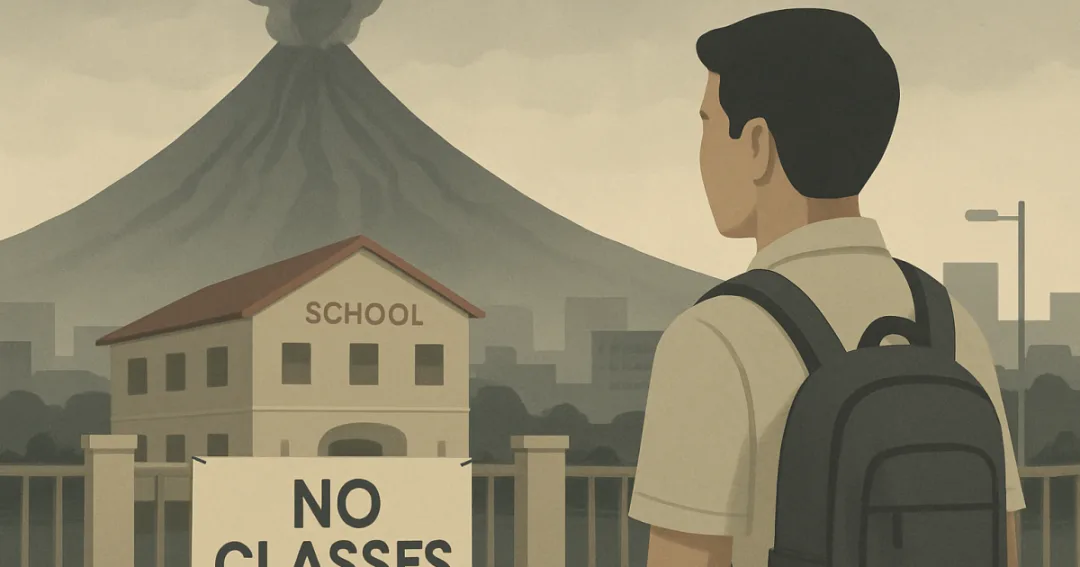
Class suspensions announced for May 4 in areas affected by Mayon Volcano’s unrest are a reminder that education policy often intersects directly with disaster preparedness. When local authorities call off classes, it is not merely a logistical decision about school schedules; it is a judgment about risk, safety, and the capacity of communities to cope with uncertainty. For families living near an active volcano, the decision carries emotional weight, disrupting routines while reviving memories of past eruptions. For schools, it means recalibrating lesson plans, attendance requirements, and assessment timelines, all in response to forces far beyond the classroom.
In the Philippines, where volcanic and seismic activity is a familiar part of life, such suspensions have become an almost seasonal feature of the academic calendar. Mayon, in particular, is one of the country’s most closely watched volcanoes, with a long history of activity that has shaped settlement patterns, livelihoods, and local culture. Over time, communities have learned to live with this persistent presence, balancing economic necessity with caution. Class suspensions, therefore, form part of a broader culture of preparedness, in which response protocols, alert systems, and evacuation plans are periodically tested in real conditions rather than confined to drills.
The educational cost of repeated suspensions, however, should not be underestimated. Each “walang pasok” announcement may be necessary, yet cumulatively they can erode instructional time, widen learning gaps, and strain already limited resources. Students who lack access to remote learning tools are particularly vulnerable to falling behind whenever physical classes are halted. Teachers, too, must constantly adapt, compressing curricula or reshuffling activities, while administrators attempt to preserve academic standards in an environment that demands flexibility above all else.
At the same time, these disruptions underscore the need for more resilient education systems in hazard-prone areas. Integrating disaster risk reduction into school planning is not just about having evacuation routes and emergency kits; it is also about designing calendars, teaching methods, and learning materials that can withstand periodic interruptions. Blended learning models, modular instruction, and community-based support networks can help ensure that learning continues even when classrooms are closed. Coordination among education authorities, local governments, and disaster response agencies is essential so that decisions on suspensions are timely, consistent, and clearly communicated to the public.
Ultimately, the class suspensions prompted by Mayon’s unrest should be viewed not only as a necessary precaution but also as an opportunity for reflection. They invite a reassessment of how society values both safety and education, and how institutions can better serve communities that live under the constant shadow of natural hazards. As monitoring continues and conditions evolve, the challenge is to move from reactive measures toward a more anticipatory, resilient approach. If authorities, schools, and communities can treat each disruption as a lesson in preparedness, then the temporary silence of classrooms may contribute to a more secure and informed future for the students who inhabit them.