SENATOR BONG GO SAYS DUTERTE’S 81ST BIRTHDAY IS “LONELIEST”
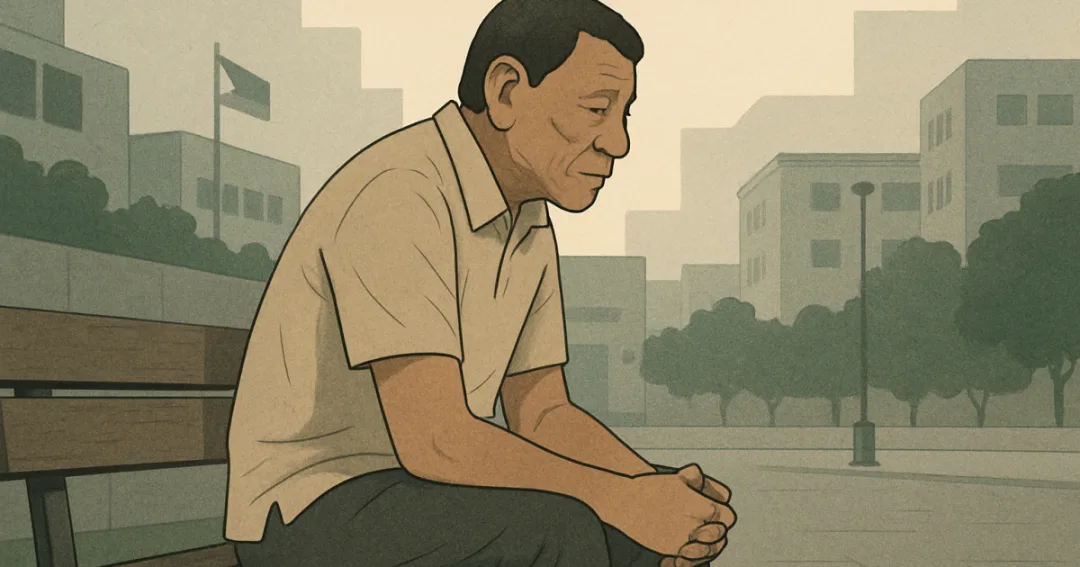
Senator Christopher “Bong” Go’s description of former president Rodrigo Duterte’s 81st birthday as his “loneliest” is more than a personal remark about an aging political figure. It invites reflection on how power, popularity, and public controversy reshape a leader’s later years. Birthdays of former heads of state are often treated as symbolic markers of legacy, occasions for political allies to reaffirm loyalties and for critics to revisit unresolved debates. When a close confidant publicly frames such a moment in terms of loneliness, it subtly shifts the narrative from one of influence to one of isolation. That shift matters in a country where politics is frequently intertwined with personality and where the afterlife of a presidency continues to shape public discourse.
The image of a once-dominant leader confronting a quieter, more contested twilight is not unique to the Philippines. Around the world, former leaders have experienced varying degrees of distance from the public stage, whether by choice, by legal circumstances, or by shifting political winds. In many cases, the end of formal power exposes the fragility of political alliances that once appeared solid. What looks like enduring loyalty can prove to be contingent on access, patronage, or shared interests that fade over time. The suggestion of loneliness, then, underscores how quickly the machinery of politics can move on, even from figures who once commanded near-total attention.
This moment also highlights the human dimension behind highly polarizing public careers. Regardless of one’s view of Duterte’s record, his trajectory illustrates how leaders become symbols onto which a society projects both hopes and grievances. Over time, the person behind the symbol can be obscured, reduced to shorthand for a set of policies, controversies, or political alignments. References to loneliness remind the public that even the most combative or celebrated leaders eventually face private reckonings with age, health, and memory. This does not erase accountability, but it complicates the simplistic narratives of hero or villain that often dominate public debate.
For the broader public, the framing of Duterte’s birthday as “lonely” may serve as a quiet commentary on the costs of a deeply confrontational political style. When political life is defined by sharp divisions, the eventual exit from office can leave a leader surrounded primarily by a shrinking circle of loyalists and an expanding field of critics or indifferent observers. Institutions, meanwhile, are tasked with processing the legacies of such leaders through ongoing investigations, policy reversals, or reinterpretations of recent history. Citizens watch these processes while forming their own judgments about what kind of leadership they wish to endorse in the future. In this sense, the personal story of one former president becomes a lens through which a society evaluates its political culture.
Ultimately, the notion of a “loneliest” birthday for a former head of state prompts a sober reflection on the fleeting nature of political power. It suggests that the truest measure of leadership may not be the crowds it can summon at the height of authority, but the respect it retains when the microphones are turned off and the motorcades have faded. As the country continues to debate the legacies of recent administrations, it may be worth asking what kind of political life allows for both firm conviction and a dignified, less isolated retirement. The answer to that question will not come from one birthday or one remark, but from the gradual strengthening of institutions over personalities. In the long run, a political culture that values accountability, restraint, and genuine public service may