MARCOS: WHAT HAPPENED TO THE SENATE?
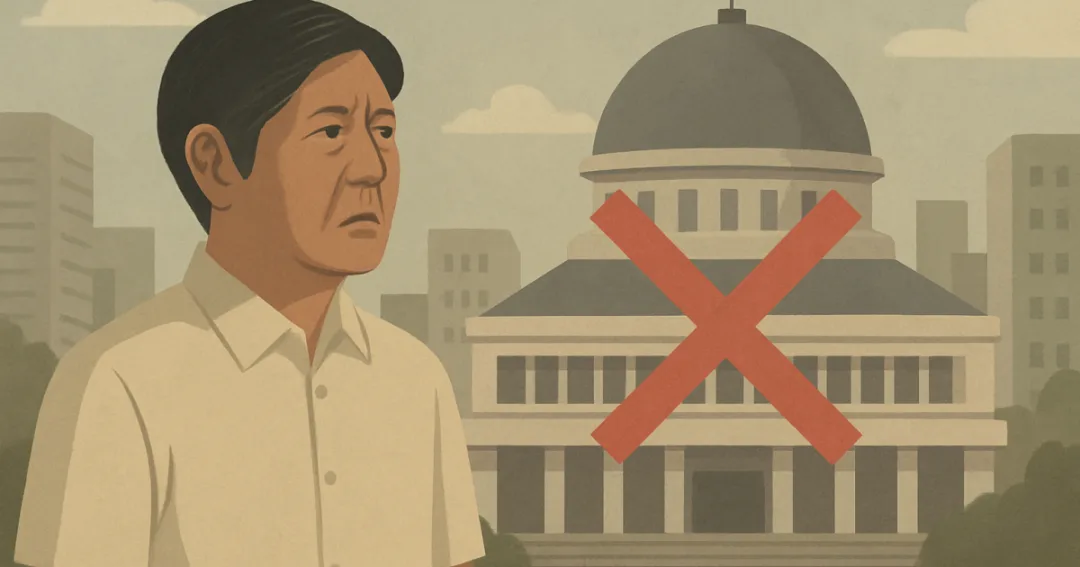
The recent remarks of President Ferdinand Marcos Jr. questioning “what happened to the Senate” have crystallized a growing unease about the state of the country’s upper chamber. Once widely perceived as a forum of independent voices and rigorous inquiry, the Senate now finds itself under scrutiny for the quality, tone, and priorities of some of its proceedings. Public debates that should clarify policy choices sometimes appear mired in personality-driven exchanges, extended hearings, and shifting political alliances. For citizens who look to the Senate as a counterweight to executive power and as a guardian of the legislative process, this perceived drift is not a trivial matter. It directly affects trust in institutions that are supposed to channel disagreement into constructive outcomes.
Historically, the Senate has been associated with moments of national consequence, from high-profile investigations to critical votes on foreign and economic policy. Its design as a body elected at large was meant to encourage a broader, more national perspective among its members. Over time, however, the forces of party politics, media exposure, and the permanent campaign have altered the incentives facing senators. Hearings that once focused on building a factual record can sometimes resemble stages for political positioning. This is not unique to the current administration, but the president’s recent comments have brought the question of institutional performance back into sharp focus.
The concern is less about any single controversy and more about the cumulative effect of how the Senate conducts its work. When legislative energy is perceived to be consumed by recurring investigations with limited legislative follow-through, the public may begin to doubt whether hearings are genuinely aimed at reform or merely at spectacle. When oversight appears selective, questions arise about consistency and fairness. And when debates are framed more around personalities than around clearly articulated policy trade-offs, citizens are left with less clarity on issues that affect their daily lives. Over time, this can erode the Senate’s moral authority, even if its formal powers remain intact.
The implications extend beyond the institution itself. A Senate that is seen as distracted or fragmented can weaken the overall system of checks and balances. It can also complicate the government’s ability to respond coherently to economic, social, and security challenges that demand clear legislation and stable policy direction. Conversely, a Senate that recommits to deliberation, transparency, and substantive oversight can help temper executive overreach, refine flawed proposals, and give voice to sectors that feel unheard. The difference lies not in formal rules alone, but in the collective discipline, priorities, and standards that senators choose to uphold.
If the question is “what happened to the Senate,” the more productive response is to ask what kind of Senate the country now needs. That requires introspection from senators themselves, but also a more demanding public that looks beyond viral moments to the hard, often unglamorous work of lawmaking. Strengthening committee work, focusing inquiries on clear legislative outcomes, and maintaining civility even amid sharp differences are not dramatic reforms, but they are within reach. The institution has reinvented itself before in response to changing times. Whether it can do so again will depend on whether those who sit in the chamber see themselves not just as political actors of the moment, but as stewards of a democratic legacy that must outlast any single administration.