AYATOLLAH MOJTABA KHAMENEI
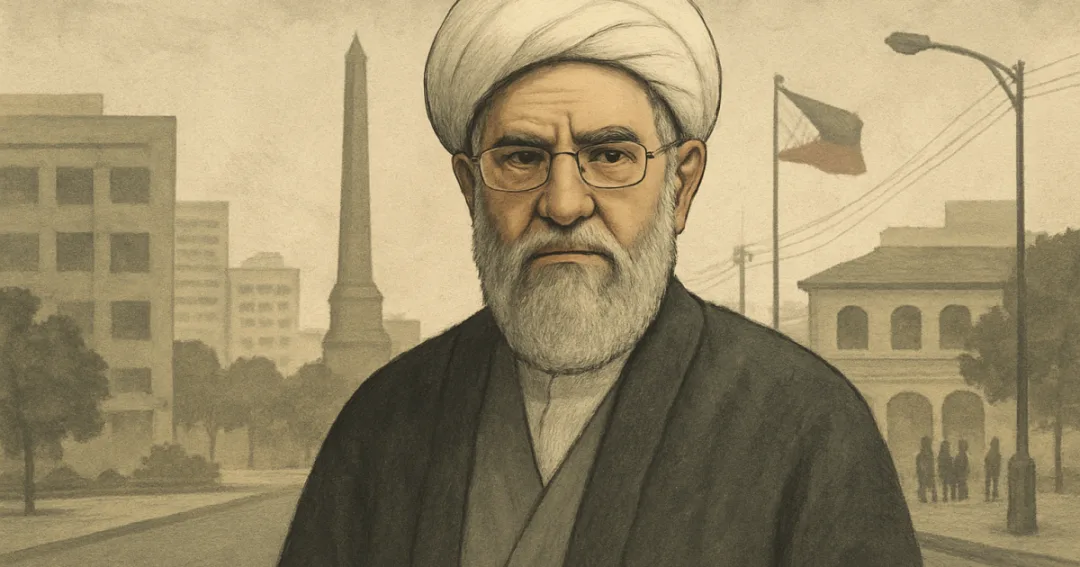
Ayatollah Mojtaba Khamenei has emerged in recent years as one of the most discussed figures in debates about Iran’s political future, despite maintaining a notably low public profile. As the son of the current Supreme Leader, his name surfaces whenever observers speculate about succession in the Islamic Republic’s unique blend of religious and political authority. This attention is not only about one individual; it reflects broader questions about how power is transferred, legitimized, and sustained in a system that presents itself as both revolutionary and institutional. The possibility—however uncertain—of a familial succession challenges long‑standing narratives about the nature of Iran’s post‑revolutionary leadership. It also raises important questions about how the country’s political and clerical elites might navigate a transition at the very top of the state.
To understand why Ayatollah Mojtaba Khamenei attracts such scrutiny, it is necessary to consider the historical and institutional context in which he is situated. Since the 1979 revolution, the position of Supreme Leader has stood at the apex of Iran’s power structure, combining religious authority with decisive influence over security and strategic policy. The first succession, from Ayatollah Ruhollah Khomeini to Ayatollah Ali Khamenei, was shaped by revolutionary legitimacy, wartime experience, and a relatively cohesive elite. Today, the environment is more fragmented and contested, with multiple centers of influence across religious, political, and security institutions. In this more complex landscape, any figure perceived as a potential successor inevitably becomes a focal point for speculation, bargaining, and concern.
Ayatollah Mojtaba Khamenei’s significance lies less in his public record, which remains limited, and more in the symbolism attached to his name and lineage. In a system that has often emphasized collective deliberation and institutional processes, the idea of power passing from father to son invites comparisons with hereditary rule, regardless of whether such a transition ultimately occurs. For some within Iran’s political class, a known and well‑connected figure might be seen as a source of continuity and predictability at a time of internal and external pressures. For others, the prospect of a dynastic turn would sit uneasily with the revolutionary ethos that originally sought to replace monarchical patterns of succession. In this tension between continuity and principle lies much of the debate surrounding his potential role.
The broader implications of this debate extend beyond Iran’s borders. Foreign governments and analysts watch the evolving discourse around succession for clues about future policy directions, internal stability, and the balance between ideological and pragmatic currents within the leadership. Domestically, even the perception of a pre‑arranged outcome can shape how different factions, institutions, and segments of society position themselves. Whether Ayatollah Mojtaba Khamenei remains a background figure, becomes more publicly visible, or is ultimately sidelined, the process will test the credibility of formal mechanisms designed to manage leadership transitions. It will also reveal how much weight is carried by informal networks, personal loyalties, and generational change within the ruling elite.
Looking ahead, the discussion around Ayatollah Mojtaba Khamenei serves as a lens through which to view deeper structural questions facing the Islamic Republic. How Iran navigates its next succession—who is considered, how they are chosen, and how the decision is presented—will say much about the resilience and adaptability of its political model. For observers, the key is less to predict a single outcome than to understand the range