BANGSAMORO DISTRICTING LAW PASSED: 48 YES, 19 NO, 4 ABSTENTIONS
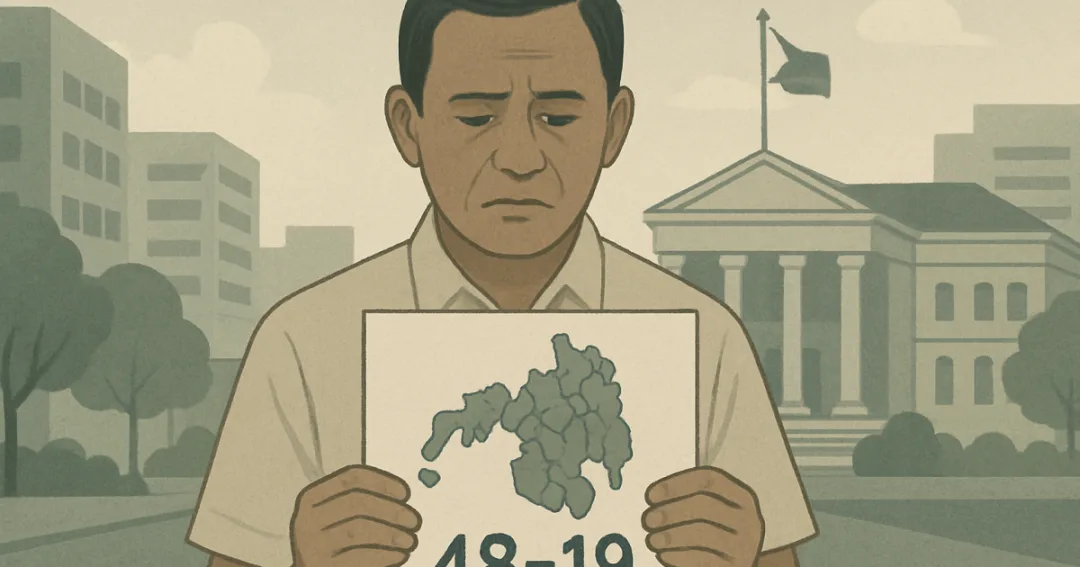
The passage of the Bangsamoro districting law, approved with 48 votes in favor, 19 against, and 4 abstentions, marks a consequential moment in the region’s political evolution. At its core, districting is about how communities are grouped for representation, how votes are translated into seats, and how power is distributed within a parliamentary or legislative framework. For a region still consolidating its autonomous institutions, the way districts are drawn will influence whose voices are amplified and whose concerns might be diluted. That is why the vote tally, while only a snapshot of institutional decision-making, hints at deeper debates over fairness, inclusion, and long-term stability.
To understand the significance of this law, it must be placed in the broader trajectory of the Bangsamoro’s transition from conflict to self-governance. Districting is not occurring in a vacuum; it follows years of negotiations, peace agreements, and institutional experimentation intended to replace armed struggle with political participation. In such a context, the map is not merely a technical artifact but a political compromise, reflecting competing claims of identity, geography, and history. The law’s passage suggests that, despite reservations from a substantial minority, the majority of representatives consider the proposed configuration an acceptable basis for moving forward.
The division in the vote underscores that questions around district boundaries are rarely settled by simple arithmetic. Those who supported the law may view it as a necessary step to avoid paralysis and to prepare for future elections under clearer rules. Those who opposed or abstained may worry about potential imbalances, such as over- or under-representation of particular localities, communities, or interest groups. While these concerns are not unique to the Bangsamoro, they are magnified in a region where perceptions of marginalization have historically fueled grievance. The challenge now is to ensure that the new districts do not become another source of political contention but are instead refined through open, evidence-based review.
Institutions responsible for implementation will play a decisive role in shaping public trust in the law. Transparent criteria, accessible information about how boundaries were drawn, and opportunities for affected communities to raise concerns can all help legitimize the outcome. Civil society, religious leaders, traditional authorities, and other stakeholders can contribute by monitoring the process and encouraging constructive engagement rather than zero-sum competition. Over time, electoral outcomes under the new districting scheme will provide a practical test of whether representation has indeed become more balanced and responsive. If adjustments are needed, mechanisms for review and amendment should be treated as part of normal democratic practice rather than as a sign of failure.
Looking ahead, the Bangsamoro’s districting law should be seen not as an endpoint but as one more step in a long, incremental process of building autonomous governance. The true measure of its success will not be the vote count recorded on the day of passage, but the quality of representation, policymaking, and public confidence that emerges in the years to come. Constructive criticism, especially from those who voted against or withheld support, can serve as a valuable resource if it is channeled into concrete proposals and careful monitoring. For a region whose political institutions are still relatively young, the capacity to debate, revise, and improve foundational laws may be just as important as the laws themselves. In that sense, the districting law is both a test and an opportunity: a test of institutional maturity, and an opportunity to deepen the culture of democratic participation in the Bangsamoro.