DIOKNO: IMPEACHMENT NOT A WASTE OF TIME AND MONEY
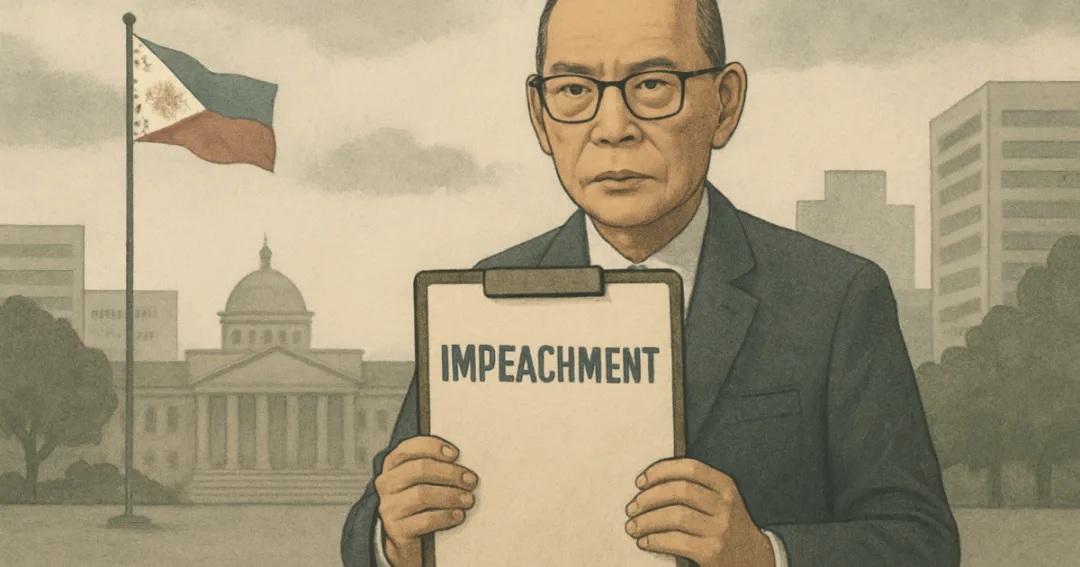
When a senior economic official argues that impeachment is not a waste of time and money, the statement invites a broader reflection on how democratic systems allocate their limited attention. Impeachment, by design, is an extraordinary remedy, intended for rare moments when questions about public trust and constitutional duty rise above ordinary political disagreement. It is inherently disruptive, often polarizing, and typically expensive in both financial and opportunity costs. Yet to dismiss it outright as a distraction risks overlooking its deeper role as a constitutional safeguard. The debate, therefore, is not only about one official’s view, but about what citizens expect from their institutions when serious allegations are raised.
In many democracies, impeachment has historically been contentious but also clarifying. The process forces institutions to articulate standards of conduct for high officials and to test those standards in a formal, transparent setting. Even when it does not lead to removal from office, impeachment can serve as a public accounting, compelling evidence to be presented and arguments to be weighed. This history suggests that the value of impeachment cannot be measured solely in pesos or minutes of legislative time. Instead, it must be assessed in terms of how it reinforces or erodes public confidence in the rule of law.
From a governance perspective, the concern about “waste” is not trivial. Economic managers often emphasize stability, predictability, and continuity as prerequisites for investment and growth. Prolonged political trials can unsettle markets, delay policy initiatives, and crowd out attention from urgent social and economic challenges. However, there is also a cost to leaving serious questions unanswered: uncertainty about integrity at the top can deter long-term commitments, weaken institutional morale, and foster cynicism among citizens. The challenge is to balance the need for accountability with the imperative of maintaining functional, responsive governance.
Public perception plays a crucial role in determining whether impeachment is seen as a legitimate exercise or as partisan theater. When citizens perceive the process as grounded in principle, conducted with due process, and focused on facts rather than personalities, they are more likely to accept its outcome, whatever it may be. Conversely, if impeachment is framed primarily as a political weapon, it risks deepening divisions and normalizing the idea that institutions can be used for short-term advantage. Officials who defend the process as not being a waste implicitly acknowledge that democratic systems sometimes need to pause, scrutinize, and correct themselves. That pause, though costly, can be an investment in long-term institutional credibility.
Ultimately, the question is not whether impeachment consumes time and resources—it inevitably does—but whether a democracy can afford to ignore serious allegations against its highest officials. Treating impeachment as an essential, if occasionally disruptive, instrument of accountability underscores the idea that public office is a public trust, not a private entitlement. If conducted responsibly, such proceedings can clarify standards, strengthen checks and balances, and remind both leaders and citizens that no position is beyond scrutiny. In that sense, the real waste would be a system that refuses to use its own mechanisms for self-correction. The measure of a mature democracy is not the absence of crises, but the integrity and restraint with which it confronts them.