DUTERTE ALLIES TURN PARADA DABAWENYO INTO POLITICAL EVENT
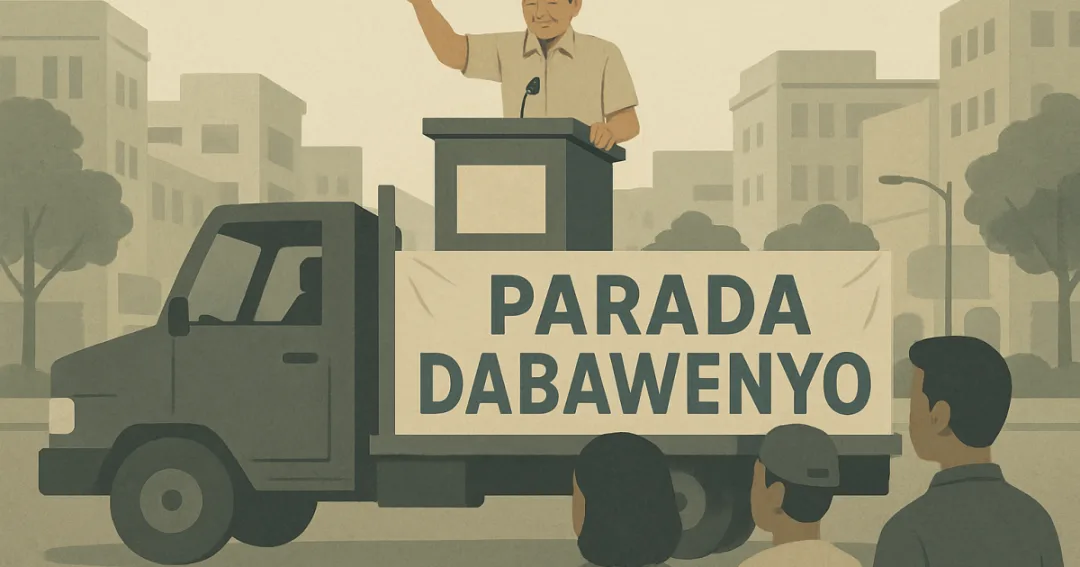
The transformation of Davao City’s Parada Dabawenyo into a stage for allies of former president Rodrigo Duterte underscores a recurring tension in democratic societies: where to draw the line between civic celebration and political mobilization. Parades and festivals are, by design, communal spaces meant to showcase local identity, culture, and pride. When political figures and their supporters use such events to signal strength, project unity, or advance partisan narratives, the character of the celebration inevitably shifts. This matters because public festivities are among the few remaining arenas where citizens of different persuasions can gather without overt political pressure or alignment. Once these spaces are heavily politicized, the sense of shared civic belonging can erode.
To be clear, politics has always been present at public events, in the Philippines and elsewhere. Elected officials attend festivals, deliver remarks, and appear in photo opportunities as part of their public duties and visibility. What raises concern is not the mere presence of politicians but the perception that a cultural event has been repurposed primarily as a political show of force. In a city strongly associated with the Duterte name, any high-profile participation by their allies will naturally be read as a political signal, especially in a period of shifting national alliances. The symbolism of turning a local parade into a de facto rally can deepen existing political divides, even if organizers insist that all groups are welcome.
The broader context is that Philippine politics has long relied on personality-driven networks and local power bases. Political clans often anchor their influence in cities and provinces where they maintain deep social, economic, and cultural ties. Public celebrations in these areas can become extensions of this influence, whether through sponsorships, visible branding, or the strategic positioning of officials and their supporters. This pattern is not unique to one family or faction, but it becomes more visible when national figures are involved and when tensions with other centers of power are high. As a result, what might otherwise be an ordinary civic event acquires national significance and invites closer scrutiny.
For citizens, the implications are both practical and symbolic. On a practical level, when cultural events are perceived as partisan, some residents may feel less inclined to participate, fearing that attendance could be interpreted as political endorsement. On a symbolic level, the blurring of lines between civic ritual and political messaging can weaken trust in institutions tasked with ensuring neutrality, such as local organizing committees or cultural offices. This does not mean politics should be banished from public life; democratic engagement is inherently visible and noisy. But it does suggest that there is value in preserving certain spaces where community identity takes precedence over factional competition, and where participants are not subtly sorted into camps.
Looking ahead, the challenge for local leaders, event organizers, and political actors is to exercise restraint and clarity. They can set guidelines that keep official participation within reasonable bounds, while still recognizing that political figures have a legitimate role in community life. Citizens, for their part, can insist that festivals and parades remain open, inclusive, and primarily cultural in character, regardless of which personalities are in power. The episode in Davao may serve as a reminder that democracy is not only contested in elections and legislatures, but also in the everyday spaces where people gather to celebrate who they are. How societies choose to protect those spaces will say much about the health and maturity of their public life.