DUTERTE AT THE HAGUE: ICC RULING COULD SEND HIM HOME – OR NOT
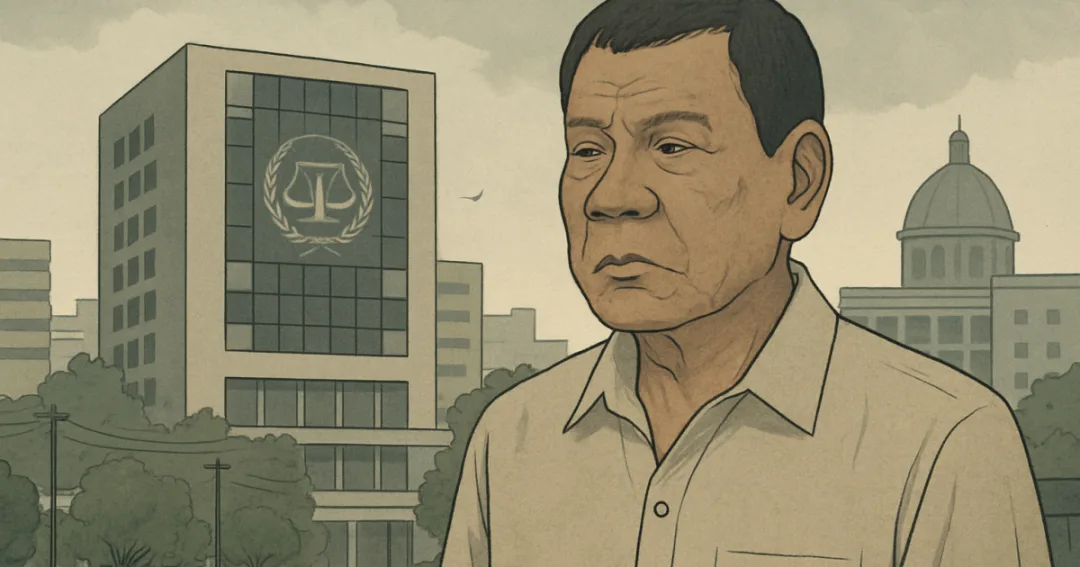
The renewed focus on Rodrigo Duterte at The Hague places the Philippines at a delicate crossroads between domestic politics and international accountability. The International Criminal Court’s ongoing process, centered on alleged abuses linked to the former president’s anti-drug campaign, has revived questions about how far international law can reach into national affairs. For many Filipinos, the issue is not simply about one man’s fate, but about what kind of justice system they want to see prevail. Whether the ICC ultimately compels Duterte’s appearance or not, the proceedings have already reshaped the public conversation around human rights, state power, and the rule of law.
To understand why this moment matters, it is important to situate it within a longer trajectory of Philippine governance and global legal norms. The Philippines has a history of dramatic political reckonings, from the fall of authoritarian rule to periodic corruption scandals, each forcing the country to confront questions of accountability. The ICC’s involvement adds a different dimension, because it operates above and beyond domestic institutions, invoking principles that many states have formally endorsed but unevenly applied. The tension lies in reconciling the country’s sovereign right to manage its own affairs with its voluntary commitments to international legal frameworks. This tension is not unique to the Philippines, but it is playing out here in a particularly visible and emotionally charged way.
The possible outcomes at The Hague are often framed in stark terms: Duterte could be compelled to face proceedings abroad, or he could remain shielded by political dynamics at home. Yet the reality is more complex. Even without a physical appearance, the ICC process can influence how future leaders calculate the costs of aggressive security policies. It can also affect how victims’ families and human rights advocates perceive the possibility of redress, whether through international channels or strengthened domestic mechanisms. At the same time, a failure to enforce accountability could reinforce public cynicism about both international institutions and local justice systems.
For Philippine institutions, the ICC case is an implicit test of capacity and credibility. If domestic mechanisms are perceived as willing and able to address allegations of serious abuses, the argument for external intervention weakens. Conversely, if investigations are seen as partial, delayed, or politically constrained, international scrutiny gains moral weight, even if its practical reach remains limited. The broader public will be watching not only the legal maneuvers, but also the tone of official responses: whether they are defensive and dismissive, or open to introspection and reform. In this sense, the case is less about a single leader’s legal fate and more about the institutional maturity of a democratic system under pressure.
Whatever the ICC ultimately decides, the Philippines will continue to live with the political, moral, and institutional questions raised by Duterte’s years in power. The Hague may or may not send him home in handcuffs, but it has already sent the country a mirror, reflecting uncomfortable truths about violence, impunity, and the limits of deterrence. How the government, the courts, and the public respond will help define the contours of Philippine democracy in the years ahead. The most constructive path forward lies not in treating the ICC as an external enemy or savior, but in using this moment to strengthen domestic accountability, clarify the boundaries of state power, and reaffirm that security and human dignity must stand together, not in opposition.