ICC CONFIRMS ALL CHARGES VS DUTERTE | THE WRAP
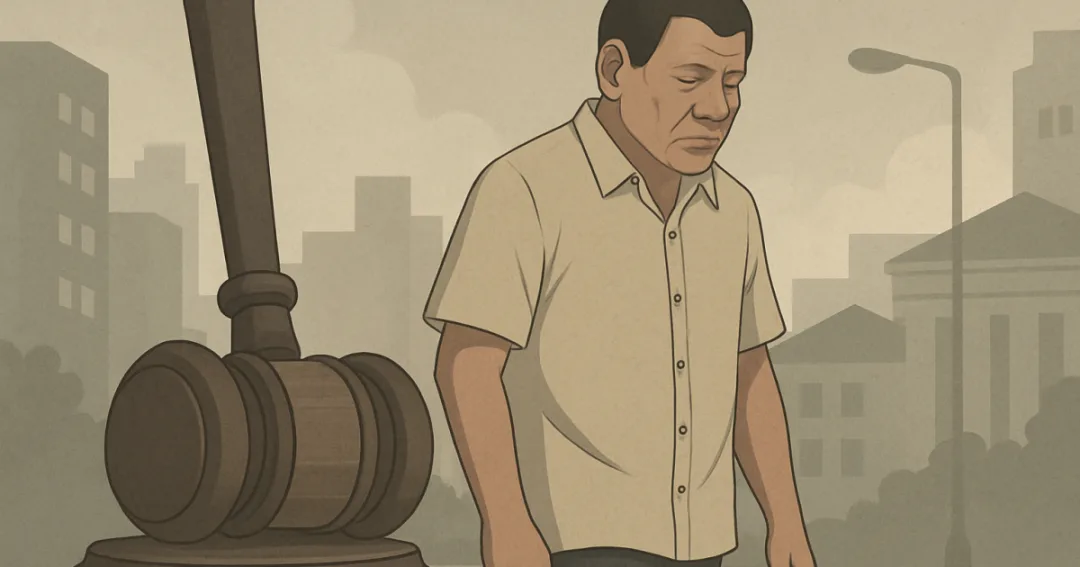
The International Criminal Court’s decision to move forward with all charges against former Philippine president Rodrigo Duterte marks a significant juncture for both the country and the broader project of international justice. At the heart of the matter are alleged human rights violations linked to the so‑called “war on drugs,” a policy that drew intense scrutiny from rights advocates and legal observers throughout Duterte’s term. For many Filipinos, the case is not only about one leader’s accountability but also about the value placed on human life, due process, and the limits of state power. The ICC’s confirmation of charges does not constitute a verdict, yet it formalizes a process that could reshape how political leaders understand their exposure to legal consequences beyond their own borders.
This development also revives longstanding debates over sovereignty and international oversight. Supporters of strong national autonomy often view external judicial scrutiny as an intrusion into domestic affairs, especially when it concerns security and crime control policies. Advocates of international justice, on the other hand, argue that when national systems are perceived to be unwilling or unable to address serious abuses, a global mechanism becomes necessary. The Philippines’ shifting relationship with the ICC, including withdrawal from the court’s founding treaty and subsequent legal challenges, has underscored how contentious this balance can be. The confirmation of charges thus highlights an unresolved question: where does national jurisdiction end and the responsibility of the international community begin?
Beyond the legal arguments, the case touches on how societies remember and evaluate difficult chapters in their recent past. For some citizens, the anti-drug campaign was seen as a tough, if controversial, response to a persistent social problem. For others, it symbolized a period in which the rights of the marginalized were especially vulnerable and institutional safeguards appeared fragile. The ICC process cannot capture the full complexity of these lived experiences, but it forces a formal examination of policies that were often justified in the language of security and order. In doing so, it implicitly asks whether the pursuit of safety can ever be separated from a robust commitment to human dignity and the rule of law.
The implications extend well beyond one administration or one country. Political leaders around the world are observing how international courts interpret concepts such as command responsibility, state policy, and systematic abuses. Institutions, from law enforcement bodies to the judiciary, may also feel renewed pressure to demonstrate independence and adherence to legal norms, if only to show that domestic remedies remain viable. At the same time, there is a real risk that the process could deepen political polarization at home, with supporters and critics of the former president reading the ICC’s actions through sharply different lenses. Managing that polarization will require careful communication from institutions and a public discourse that resists simplification.
Ultimately, the ICC’s confirmation of charges against Duterte is less a conclusion than the beginning of a more structured reckoning. Whatever the eventual legal outcome, the process underscores the need for transparent institutions, credible investigations, and a political culture that does not treat accountability as an case reported by authorities but as a democratic safeguard. It also invites citizens to reflect on what they expect from leaders when confronted with complex social crises that tempt heavy‑handed responses. The challenge for the Philippines, and for other nations watching closely, is to engage with these questions without descending into partisan reflexes. If that engagement is thoughtful and honest, this moment could help strengthen, rather than weaken, the foundations of both justice and governance.