MANGROVE FORESTS HEALTHY IN BARMM, CARAGA, ZAMBOANGA PENINSULA
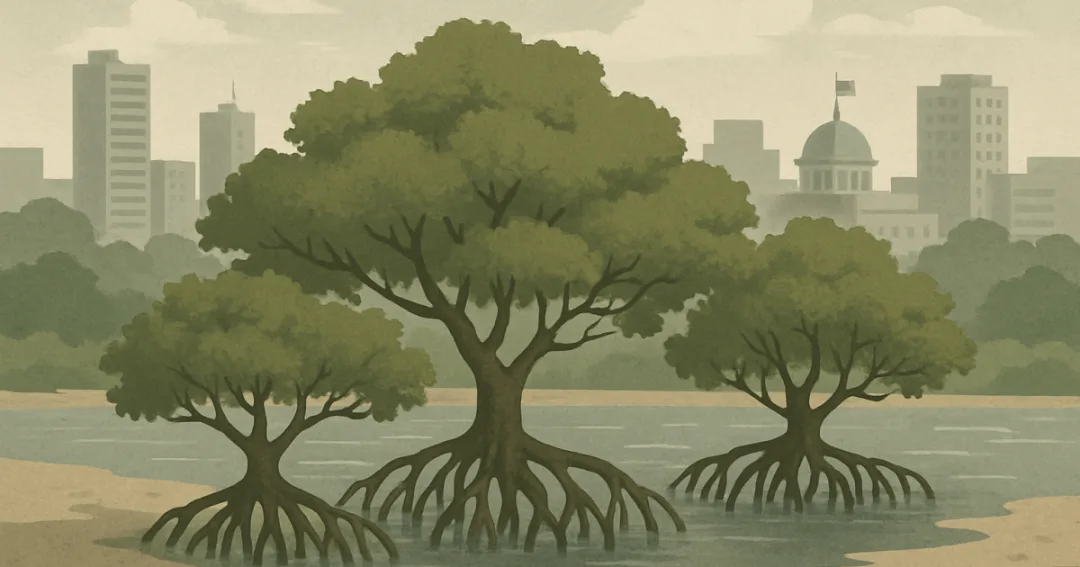
Reports that mangrove forests remain relatively healthy in parts of the Bangsamoro region, Caraga, and the Zamboanga Peninsula offer a rare piece of environmental news that is more reassuring than alarming. In a country where coastlines are long and coastal communities are dense, the condition of mangrove ecosystems is not a niche concern but a matter of public safety and long-term economic stability. Mangroves protect shorelines from storm surges, serve as nurseries for fish, and help absorb carbon from the atmosphere. When these forests are intact, they quietly perform these functions with little public attention; when they are degraded, the consequences tend to be visible only when disaster strikes. The relative health of these stands, therefore, should be read not as an excuse for complacency, but as a reminder of what is still possible when natural buffers are not yet fully eroded.
The regions where mangroves are reportedly in good condition share several broad characteristics that help explain this outcome. Many coastal areas in these regions remain less urbanized than major population centers, reducing some of the pressures from land conversion and infrastructure development. Local communities have longstanding traditions of interacting with coastal resources, which in some places has translated into informal stewardship and cautious use. In recent decades, national and local initiatives have also increasingly recognized mangroves as critical natural infrastructure, rather than vacant land awaiting “development.” While the specific policies and enforcement levels vary, the general trend has been toward more awareness and, in some areas, more structured protection.
This relatively positive picture, however, must be situated within a larger national and global context that is far less comforting. Across many coastal zones, mangrove forests have historically been cleared for fishponds, settlements, and tourism-related facilities, often faster than they can regenerate. Climate change compounds these pressures, as rising sea levels, stronger storms, and shifting salinity patterns test the resilience of even healthy stands. The experience elsewhere shows how quickly a seemingly robust mangrove belt can be fragmented by small, incremental encroachments that individually appear minor but collectively undermine the ecosystem. The health of mangroves in Barmm, Caraga, and Zamboanga Peninsula is thus both an environmental asset and a vulnerability, depending on the choices made now.
The public relevance of this issue extends well beyond environmental circles. Coastal protection from mangroves can reduce the cost of disaster response and infrastructure repair, a concern for any administration tasked with managing limited resources. Fisheries that depend on mangrove nurseries support livelihoods and local food security, especially in communities with few alternative income sources. Maintaining healthy mangroves can also complement broader efforts on climate adaptation and mitigation, as these ecosystems store carbon and help buffer climate-related risks. In this sense, safeguarding mangroves is not an isolated green agenda but part of a pragmatic strategy for risk reduction, economic resilience, and social stability.
Looking ahead, the challenge is to turn the current relative health of these mangrove forests into a durable advantage rather than a temporary reprieve. This will require consistent monitoring, more coherent land-use planning, and a deliberate effort to align local livelihood needs with long-term ecosystem protection. Institutions at all levels can help by treating mangroves as critical infrastructure that merits the same seriousness as roads or sea walls, albeit with different management tools. Communities, in turn, need to be supported so that conservation does not come at the expense of their immediate survival. If the country can learn from these still-