MAP
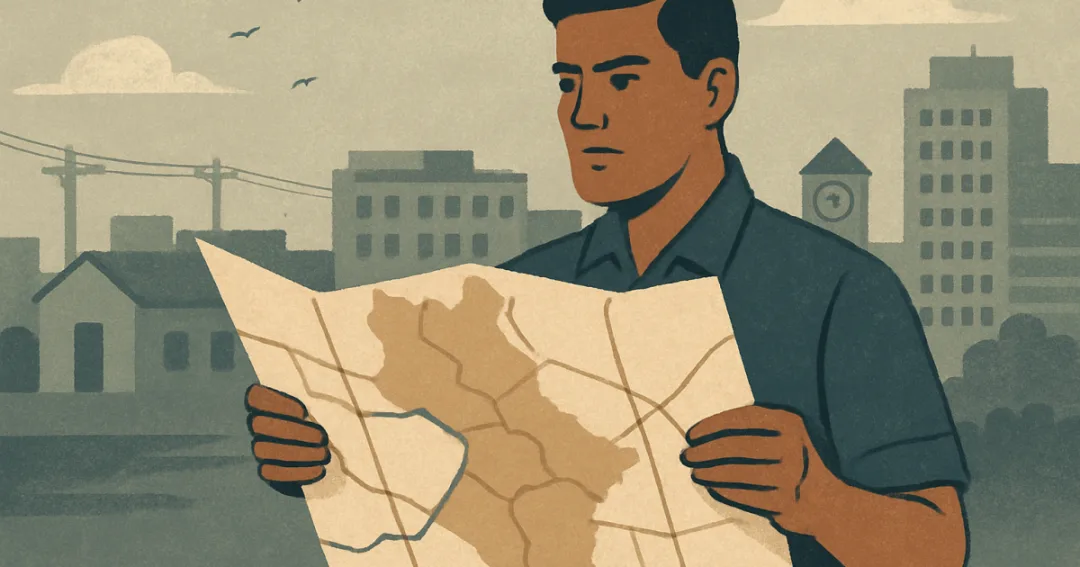
Maps are among the quietest yet most powerful tools shaping how people see the world. A map does more than show where things are; it suggests what matters, what is central, and what lies at the margins. It can compress vast distances into a single glance, turning the abstract idea of “elsewhere” into something concrete and navigable. As daily life becomes increasingly digital, most people now encounter maps not on paper but on screens, mediated by algorithms and corporate platforms. This shift raises subtle but important questions about who decides what we see, how we move, and how we understand our place in the wider world.
Historically, maps were instruments of exploration, trade, and control, often reflecting the priorities of those who commissioned them. Early world maps tended to exaggerate the size and importance of certain regions while leaving others blank or vaguely drawn, signaling not only gaps in knowledge but also in interest. Over time, cartography evolved into a more standardized and scientific practice, with efforts to minimize distortion and present a more accurate picture of the globe. Yet even the most precise projection must choose what to emphasize: borders or rivers, roads or railways, cities or forests. Every map is therefore both a technical product and a cultural artifact, carrying assumptions about what is worth depicting.
In the digital era, these choices are increasingly made by mapping platforms that integrate navigation, search, and data visualization. When a user opens a map application, they do not only see geography; they see a curated hierarchy of restaurants, businesses, landmarks, and routes. The prominence of certain locations, the recommended paths, and the layering of traffic or transit data all influence daily decisions. This convenience is undeniable, but it also concentrates a quiet power: the ability to shape patterns of movement, commerce, and attention. For communities, appearing clearly and accurately on these maps can affect visibility, accessibility, and economic opportunity.
This makes questions of inclusion, accuracy, and representation more than technical matters. Incomplete or outdated maps can obscure informal settlements, rural roads, or small community facilities, reinforcing a sense of invisibility. Conversely, participatory mapping projects and open data initiatives have shown that citizens can help correct omissions and document their own spaces, from disaster-prone areas to heritage sites. When institutions encourage such efforts, they can strengthen public understanding of geography, risk, and resources. At the same time, concerns about privacy, surveillance, and data ownership remind us that mapping is not only about what is shown, but also about what is silently recorded.
Looking ahead, maps will likely become even more layered, interactive, and predictive, integrating real-time information about climate, infrastructure, and social conditions. This offers opportunities for better planning, safer travel, and more informed public debate, but it also calls for transparency in how maps are produced and updated. Users need a basic awareness that no map is neutral, even when it appears purely technical. Institutions, educators, and technology providers share a responsibility to foster critical literacy about maps: who draws them, whose perspectives they embed, and how they might change. In a world where orientation is increasingly mediated by screens, learning to read maps critically is another way of learning to navigate power, not just terrain.