MARGINALIA: BETWEEN COLORS AND CREEDS
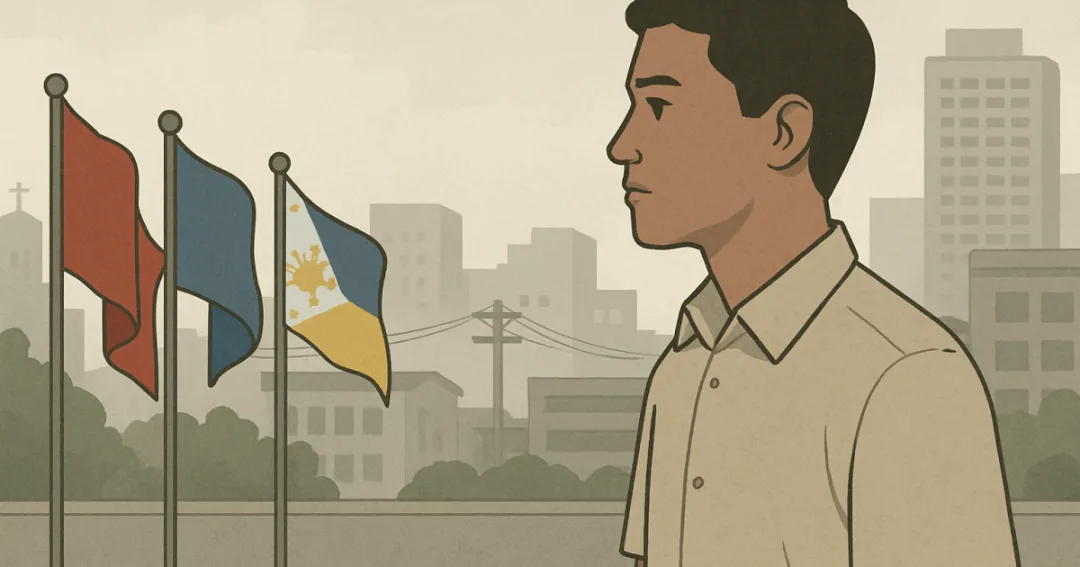
Marginalia, in its most literal sense, refers to the notes scribbled in the margins of a page—those quiet comments that do not dominate the text but subtly question, affirm, or complicate it. In social life, there are similar margins where people exist between colors and creeds, not fully claimed by any single category. These are the individuals whose identities cross racial, ethnic, religious, or cultural lines, and whose experiences do not fit neatly into the standard boxes used by institutions and public discourse. Their presence challenges the comfort of fixed labels and raises questions about how societies define belonging. To pay attention to this “marginalia” is to recognize that the story of a community is rarely as tidy as its official narrative suggests.
Historically, societies have often tried to resolve ambiguity by enforcing clearer boundaries—through law, custom, or expectation. Racial hierarchies, religious divisions, and national borders have been drawn in ways that presume people can be sorted into discrete groups, each with its own presumed loyalties and characteristics. Yet migration, intermarriage, and global communication have steadily complicated these assumptions. Many people now grow up with multiple languages at home, several religious traditions in the family, or a racial background that defies single-color descriptions. The margins are no longer rare footnotes; they are becoming dense with overlapping lines of identity.
This shift has practical implications for institutions that still rely on fixed categories to make sense of their populations. Schools, workplaces, and public agencies often ask people to choose a single box for race, ethnicity, or religion, even when that choice erases important parts of who they are. Policies aimed at inclusion sometimes struggle with this complexity, because they were designed for a simpler landscape of majority and minority groups. When lived experience does not match institutional categories, people can feel misrepresented or invisible, which in turn can affect their trust in public processes. At the same time, these tensions can push institutions to refine their frameworks, making them more flexible and responsive to reality.
Culturally, those who live between colors and creeds often serve as informal translators, moving between communities and helping to soften misunderstandings. Their very existence can undermine stereotypes, because they embody combinations that prejudice insists should not coexist. Yet the in-between position can also be isolating, as some may be told they are not “enough” of any given identity to belong fully. The emotional labor of explaining oneself, correcting assumptions, or navigating competing expectations is rarely acknowledged in public debates about diversity. Recognizing this labor does not require romanticizing hybridity; it simply means treating it as a normal, legitimate way of being, rather than an exception that needs constant justification.
As societies become more interconnected, the margins may increasingly resemble the center, not by erasing distinct traditions but by normalizing complexity. The challenge is to build civic cultures and institutional practices that can accommodate layered identities without forcing people to fragment themselves for the sake of administrative convenience. That involves listening carefully to those who live in the margins and allowing their experiences to inform how we talk about rights, representation, and community. In a sense, the future of social cohesion depends on reading the marginalia as attentively as the main text. Between colors and creeds, there is not a void but a rich, if sometimes uncomfortable, space where new understandings of belonging can be written.