NATIONAL GREENWASHING PROGRAM: FROM GREEN PROMISES TO FOREST LOSS ON INDIGENOUS LAND
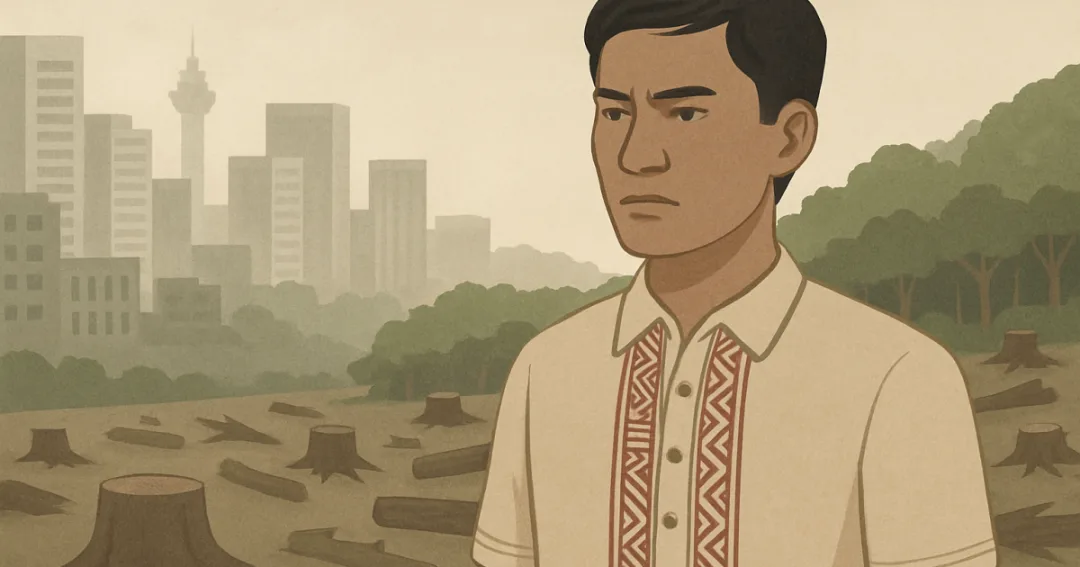
National programs that promise to “green” economies often sound unassailable: more trees, cleaner air, and a visible commitment to climate responsibility. Yet behind these appealing narratives, a more troubling pattern has emerged in many countries: forest projects marketed as environmental progress that in practice accelerate forest loss, particularly on Indigenous land. This dissonance between rhetoric and reality is what many observers now describe as institutional greenwashing. It matters because it shifts attention away from genuine climate solutions and weakens public trust in environmental policy. When ambitious-sounding initiatives mask the erosion of ecosystems and rights, the long-term damage can be deeper than if no program had been announced at all.
Historically, state-led conservation and reforestation efforts have tended to follow a familiar script. Governments identify remote or sparsely populated areas as sites for new forests, carbon offset schemes, or conservation zones, often describing them as “unproductive” or “underutilized.” In many cases, these areas are in fact long-inhabited Indigenous territories, governed by customary land systems that are not always reflected in formal registries. The result is a quiet reclassification of land that can weaken traditional stewardship and open the door to commercial exploitation. What appears on national reports as increased forest cover may conceal the displacement of communities and the replacement of biodiverse landscapes with monoculture plantations.
The implications reach beyond local conflicts over land. When national programs equate any increase in tree cover with environmental success, they risk ignoring the difference between living forests and industrial tree farms. Biodiverse forests store carbon, regulate water systems, and sustain cultural and spiritual practices; simplified plantations primarily serve as raw material and short-term carbon accounting tools. If Indigenous land is cleared for such projects, the net effect can be a loss of ecological resilience and traditional knowledge that has maintained those landscapes for generations. In this way, greenwashing is not merely a matter of misleading language, but a structural issue that reshapes who controls land and whose definitions of “green” prevail.
Public relevance lies in the way these programs are often presented as evidence of national leadership on climate, both domestically and on the international stage. Citizens may be encouraged to take pride in ambitious targets and glossy reports without access to clear, disaggregated information about where new forests are being established and under what conditions. Without transparency, it becomes difficult for the public to distinguish between projects that genuinely restore ecosystems and those that displace communities or accelerate deforestation elsewhere. Independent monitoring, open data, and meaningful participation by affected peoples are therefore not technical add-ons, but essential safeguards against the quiet conversion of Indigenous land into a backdrop for environmental branding.
Moving forward, a more honest approach to national green programs would begin by recognizing Indigenous land rights and traditional stewardship as central, not incidental, to climate policy. Instead of treating Indigenous territories as empty spaces available for offset projects, governments could prioritize co-designed initiatives that reinforce customary governance and protect existing forests before creating new ones. Such a shift would not eliminate the risk of greenwashing, but it would make it harder to hide harmful practices behind broad environmental claims. Ultimately, the credibility of any national “green” agenda will rest on whether it strengthens the forests and communities that already safeguard the land, rather than sacrificing them in the name of progress.