SECURITY FORCES INVESTIGATING IF BONDI SHOOTERS HAVE CONTACTS IN DAVAO CITY
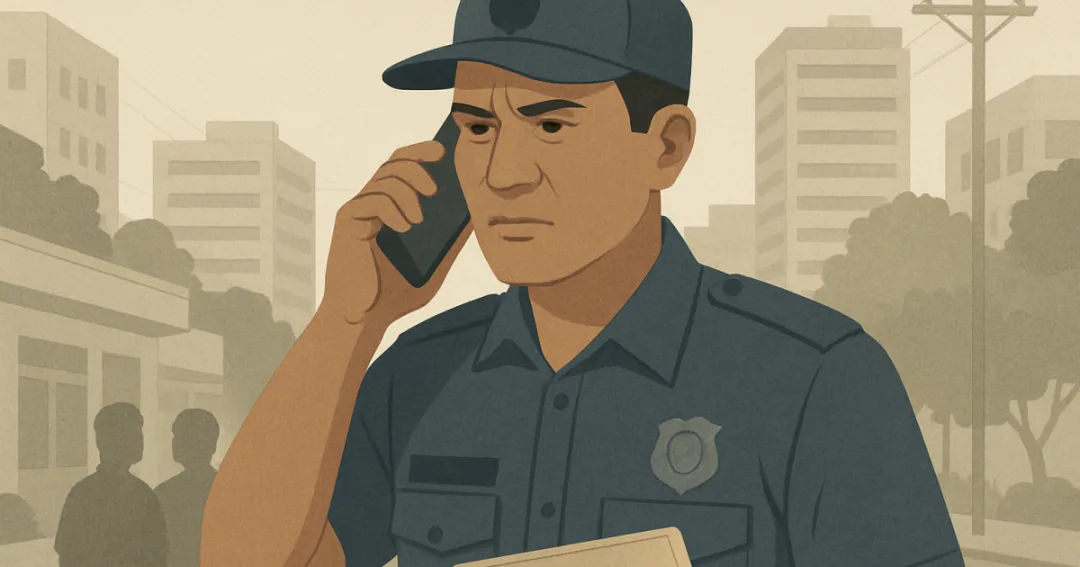
Security forces examining whether the Bondi shooters may have contacts in Davao City are confronting a question that goes beyond a single incident: how far do the networks behind acts of violence actually extend? The possibility of linkages between a high-profile case reported by authorities abroad and individuals or sympathizers in a major Philippine urban center underscores the transnational nature of contemporary security threats. Even if such connections ultimately prove tenuous or nonexistent, the mere need to investigate them highlights the complexity of tracking motivations, influences, and logistical support in a globally connected environment. For the public, this is not only a story about suspects and locations, but about how states respond when violence in one place casts a shadow over communities half a world away.
The focus on Davao City is particularly sensitive given its prominence in the national political and security landscape. Over the years, the city has been associated with both strong law-and-order narratives and episodes of violence that drew intense scrutiny. As with other major urban centers, Davao’s size, economic activity, and mobility make it a plausible node for scrutiny whenever investigators trace digital footprints, financial flows, or personal networks. This does not mean that the city is uniquely at risk or culpable, but it illustrates how reputations and past security narratives can shape where authorities look, and how quickly public speculation can form around those choices.
Historically, security investigations that cross borders or link multiple cities tend to raise broader questions about radicalization, organized crime, and the role of online spaces. In many cases, individuals involved in sensitive acts are influenced by a mix of personal grievances, ideological content, and opportunistic connections rather than a single centralized command structure. Modern communications tools can blur the line between casual online interaction and more deliberate coordination, making it difficult to distinguish between distant sympathizers and operational accomplices. This ambiguity places a premium on careful, methodical investigation rather than assumptions based on geography, ethnicity, or political affiliation.
For the public, the implications of this kind of inquiry are twofold: security and trust. On one hand, people reasonably expect that authorities will pursue every credible lead, including potential contacts in local communities, to prevent further violence and understand how an case reported by authorities came together. On the other hand, broad-brush suspicion directed at a city, a region, or a diaspora community can fuel stigma and undermine social cohesion. Responsible communication from officials and media alike is therefore crucial—conveying that an investigation is underway without prematurely framing any locality as a breeding ground for violence. When handled poorly, such narratives can discourage cooperation; when handled well, they can encourage communities to share information and remain vigilant without feeling unfairly targeted.
Ultimately, the investigation into whether the Bondi shooters had contacts in Davao City will be a test not only of intelligence work, but of institutional restraint and transparency. Whatever its findings, the process should reinforce the principle that security efforts must be evidence-based and proportionate, not driven by fear or political convenience. In an era when local events resonate globally and online discourse can amplify anxiety, societies need security institutions that can move swiftly without abandoning due process and respect for communities under scrutiny. The measure of success will not only be in clarifying the shooters’ connections, but in whether the investigation leaves the public more informed, more secure, and more confident that complex threats can be addressed without sacrificing fairness.