
WHICH IS THE RIGHT DJI OSMO CAMERA FOR YOU?
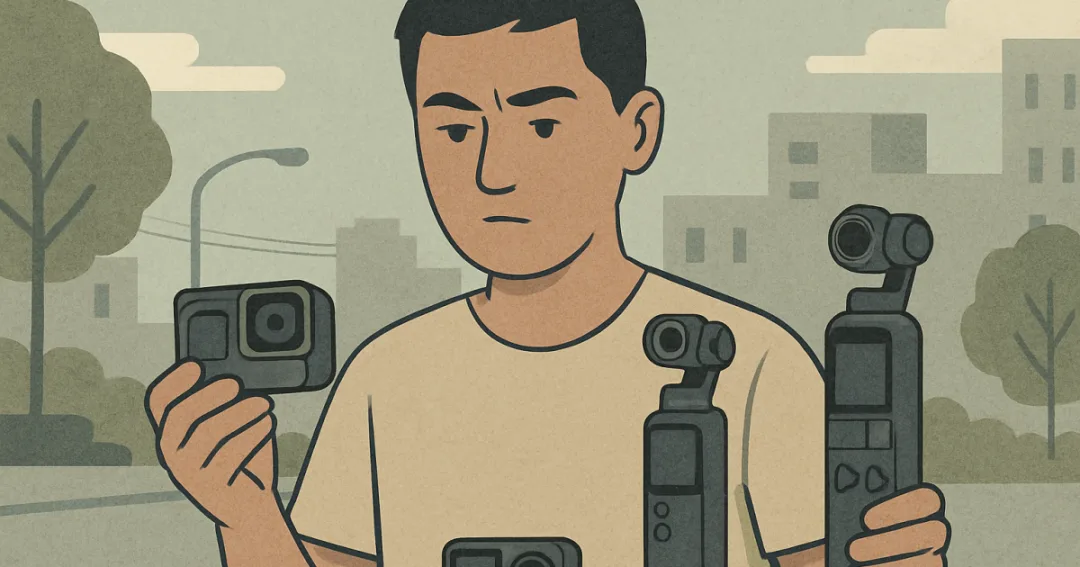
Choosing a DJI Osmo camera today is less about chasing the newest gadget and more about understanding what kind of storyteller you want to be. The Osmo line has evolved from a niche stabilised camera into a family of compact tools aimed at vloggers, travellers, action enthusiasts and everyday documentarians. At a glance, they may appear similar: small bodies, built‑in stabilisation, and an emphasis on smooth handheld footage. Yet the differences in design philosophy are significant, and those differences will shape not only how you reported situation but how often you actually reach for the camera. The real question is not which Osmo is “best,” but which one will quietly fit into your life and encourage you to keep filming.
Historically, DJI’s Osmo concept grew out of its expertise in drone gimbals, bringing that stabilisation know‑how down to ground level. Early models emphasised the novelty of ultra‑smooth video in a pocketable device, competing with both action cameras and smartphones. Over time, the line has split into clearer branches: more rugged cameras aimed at action and adventure, and more traditional “pocket” cameras aimed at creators who prefer a compact, all‑in‑one system with a built‑in screen. This evolution reflects a broader trend in consumer imaging, where people expect professional‑looking results without the complexity of professional equipment. The Osmo family, in that sense, represents an attempt to lower the barrier to cinematic footage for ordinary users.
For many buyers, the first decision is whether their primary use resembles an action camera or a miniature camcorder. Those who spend weekends cycling, diving or hiking may prioritise durability, waterproofing and hands‑free mounting over anything else. An Osmo in that category is designed to be clipped to helmets, attached to handlebars or strapped to the chest, with controls and interfaces simplified for quick operation in motion. By contrast, the pocket‑style Osmo cameras are better suited to walking tours, family events, or street scenes, where a built‑in gimbal and a small screen make it easier to frame shots and speak directly to camera. Thinking honestly about how often you will actually take the device into rough conditions is more useful than focusing on technical specifications alone.
Another dividing line is how much you want the camera to replace your smartphone as a creative tool. Some Osmo models are built around the assumption that they will be paired with a phone for monitoring, editing and sharing, turning the camera into a sort of remote lens for your mobile device. Others are more self‑contained, with their own screens, controls and storage, appealing to users who prefer to keep filming and messaging separate. There is also the question of audio: creators who speak to camera will benefit from models with better microphone placement and support for external audio, while those capturing mostly scenery or sports may accept simpler sound in exchange for a more compact form factor. These workflow considerations often matter more in daily use than incremental differences in resolution or frame rates.
Ultimately, the “right” DJI Osmo camera is the one that aligns with your habits, not your aspirations. A device that is theoretically more powerful but too awkward for your routine will end up gathering dust, while a simpler, more approachable model can quietly document years of memories and projects. Consumers would do well to look beyond marketing labels and ask a few sober questions: Where will I use this most? How will I carry it? How quickly do I need to share what


![[Walang Pasok] Class Suspensions, Thursday, February 5, 2026](https://tarana360.com/articles/images/2026-02/walang-pasok-class-suspensions-thursday-february-5-2026-1080.webp)