CATHOLIC NUNS RAISE THREE ENVI ISSUES AFFECTING MINDANAO
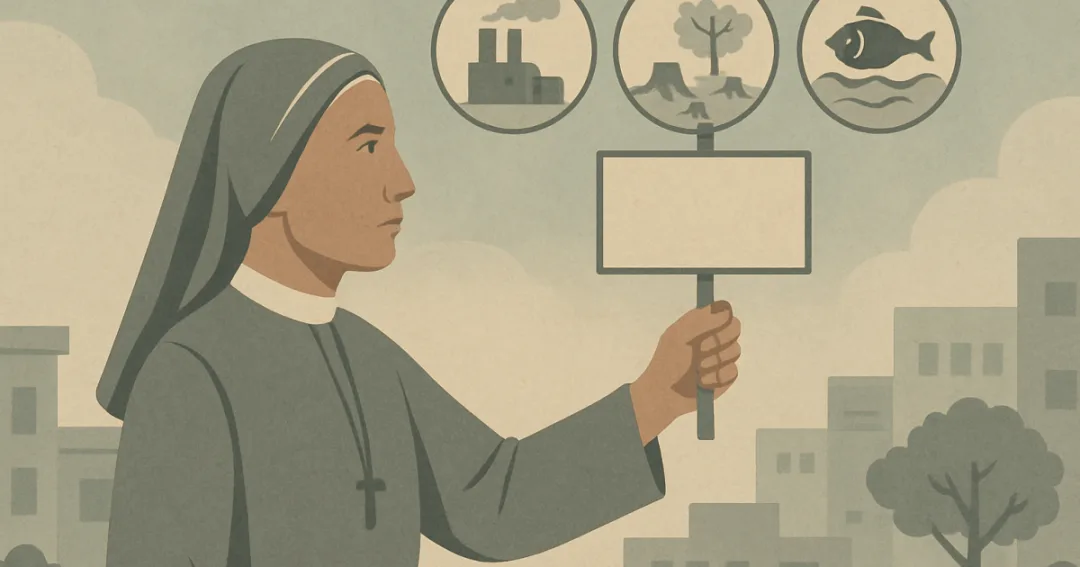
Catholic nuns in Mindanao have long worked in remote communities where environmental stress is not an abstract concern but a daily reality. When they raise environmental issues, they do so from the vantage point of people who live alongside farmers, fisherfolk, and indigenous communities. Their recent focus on three major concerns—deforestation and resource extraction, water security, and climate-related displacement—deserves careful attention. These are not simply “green” issues; they intersect with livelihoods, culture, and basic human dignity. Listening to their concerns offers a window into how environmental degradation in Mindanao is experienced at ground level rather than in policy documents.
The first concern centers on land use and resource extraction, particularly in forested and upland areas. Mindanao has seen decades of logging, plantation expansion, and mining, often in territories where indigenous peoples and smallholder farmers depend on the land for survival. Nuns who work in these areas witness how soil erosion, loss of biodiversity, and the shrinking of communal lands can erode food security and traditional practices. They also see how communities often feel excluded from decisions about land, even when these decisions profoundly affect their future. By raising this issue, they are questioning not only environmental practices but also the fairness and inclusiveness of development choices.
A second issue they highlight is water security, which links environmental management to public health and social stability. In many Mindanao communities, rivers and springs are the primary sources of drinking water, irrigation, and domestic use. When upstream forests are cleared or when industrial activities are poorly regulated, water sources can become polluted or unreliable. Nuns working in parishes and social centers are often among the first to hear complaints about murky wells, dwindling streams, or conflicts over access to irrigation. Their advocacy underscores a basic point: water is not just a resource to be allocated, but a shared lifeline that requires responsible stewardship and transparent governance.
The third concern involves climate-related risks and the growing vulnerability of communities to extreme weather events. Mindanao has experienced destructive floods, landslides, and storms that have displaced families and damaged local economies. Religious communities engaged in relief work see how the poorest households, who contribute least to global emissions, are often the least equipped to rebuild. For them, environmental advocacy is inseparable from humanitarian work: disaster response, psychosocial support, and efforts to rebuild livelihoods all intersect with questions of land planning and risk reduction. By framing climate impacts as a moral and social issue, the nuns are inviting a broader conversation about shared responsibility across sectors.
Taken together, these three concerns point to an environmental agenda that is both practical and deeply human. The nuns are not proposing technical blueprints, but they are calling for more inclusive dialogue that respects local knowledge, protects fragile ecosystems, and prioritizes the needs of the most vulnerable. Their perspective challenges institutions—governmental, religious, and civic—to move beyond short-term gains and consider long-term ecological balance. It also suggests that environmental issues in Mindanao cannot be separated from questions of justice, participation, and cultural respect. If their warnings are heeded, they may help guide the region toward a development path that is more balanced, more sustainable, and ultimately more humane.