HISTORIAN MAC TIU USES FOOD TO TRACK MAGELLAN EXPEDITION THROUGH MINDANAO
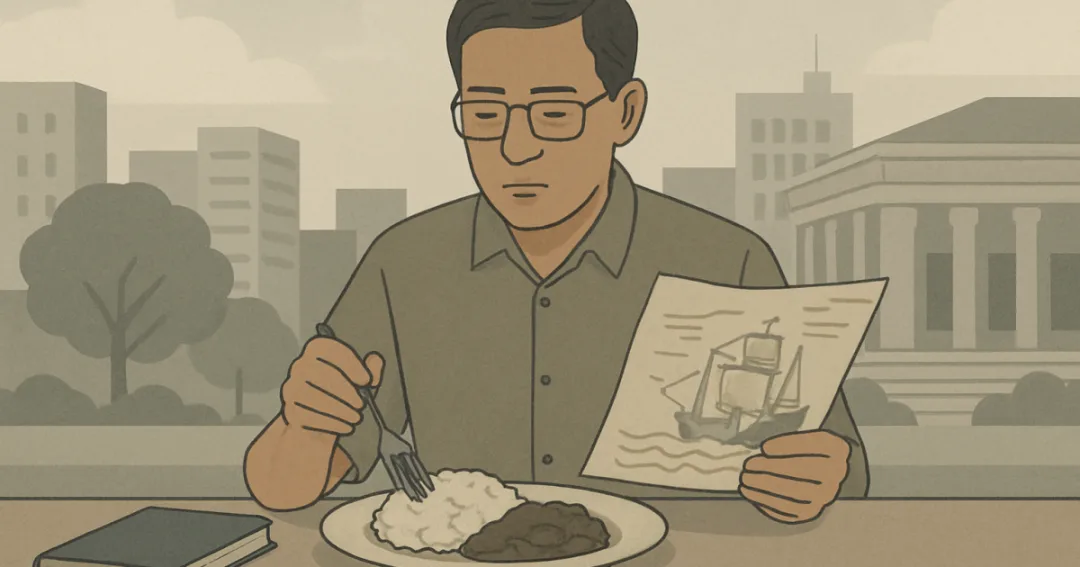
Historian Mac Tiu’s effort to trace the route of the Magellan expedition through Mindanao by studying food traditions offers a quiet but significant shift in how history can be understood. Rather than relying solely on written records or official chronicles, this approach looks at what people cooked, traded, and shared as clues to past encounters. In a region where documentation from the colonial period is often fragmentary or filtered through foreign perspectives, food becomes a kind of living archive. The idea that recipes, ingredients, and eating habits might preserve memories of contact with early European voyages invites the public to see everyday culture as historically meaningful. It also challenges the assumption that only formal texts or monuments carry the story of the past.
Using foodways as historical evidence is not a novelty in global scholarship, but applying it to the Magellan expedition’s path through Mindanao highlights a particularly underexplored chapter of Philippine history. Many familiar narratives focus on the first landfall in the Visayas and the battle that ended Magellan’s life, while treating later movements of the expedition in the south as a footnote. Yet Mindanao was part of complex trade networks long before European arrival, with exchanges involving neighboring islands and distant regions. In such a setting, new ingredients or cooking techniques brought by foreign visitors could be adopted, adapted, or quietly resisted. When historians look closely at these patterns, they can detect subtle traces of contact that written accounts might overlook or simplify.
This method also underscores the importance of local knowledge and community memory. Families who have passed down particular dishes for generations may not think of themselves as historians, yet their practices carry clues about older exchanges of goods and ideas. When scholars like Tiu document these culinary traditions, they are not merely cataloguing recipes; they are listening for how communities remember trade, conflict, and negotiation in forms that are not always verbal. This can encourage more inclusive historical narratives, in which voices from outside formal institutions gain recognition. It may also foster a sense of ownership among local communities, who see their everyday lives reflected in the broader story of the archipelago.
The public relevance of this work extends beyond academic circles. In a country where debates about identity, regional diversity, and historical interpretation remain sensitive, food can provide a less confrontational entry point into difficult conversations. Culinary history allows people to acknowledge layers of influence—indigenous, Islamic, Christian, and foreign—without immediately framing them as threats to authenticity. It can help citizens understand that cultural exchange is not a simple story of domination or purity, but a complex process of selection and adaptation. For educators, cultural workers, and tourism planners, such insights can support more nuanced representations of Mindanao and its place in national history.
Looking ahead, the use of food to track past journeys suggests a broader rethinking of how history is researched and shared. It points to the value of interdisciplinary work that respects both scholarly rigor and community experience. As more attention is given to regions and perspectives that have long been peripheral in mainstream narratives, tools like culinary analysis can help fill gaps without pretending to offer definitive answers. The challenge will be to balance imagination with evidence, and respect for tradition with critical inquiry. If pursued carefully, this approach can deepen public understanding of the Magellan expedition while also affirming that history lives not only in archives and textbooks, but at the table as well.