LIVE COVERAGE: ICC CONFIRMATION OF CHARGES HEARING FOR RODRIGO DUTERTE
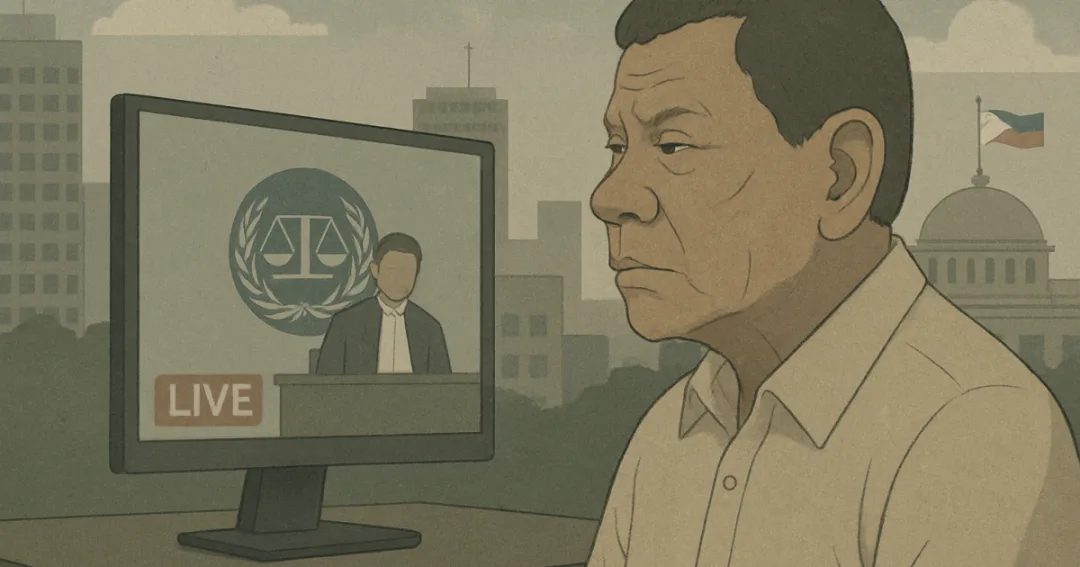
The live coverage of the International Criminal Court’s confirmation of charges hearing involving former Philippine president Rodrigo Duterte marks a significant moment in the intersection of domestic governance and international accountability. At this stage, the court is not determining guilt, but assessing whether there is sufficient basis for a full trial on alleged crimes connected to anti-drug operations. For many observers, including citizens far beyond the Philippines, the proceedings are a test of whether powerful political figures can be formally called to account for policies that may have led to widespread human rights abuses. The hearing also matters because it unfolds under the scrutiny of global media, shaping public understanding of both the allegations and the legal standards being applied. In a region where strongman leadership has often been insulated from legal consequences, the very fact of a formal hearing is politically and symbolically charged.
To understand the weight of this moment, it must be viewed against the broader history of the so‑called “war on drugs” in the Philippines and similar campaigns elsewhere. Aggressive anti-crime drives have long been justified by appeals to public safety, often framed as emergency responses to deeply rooted social problems. Yet international law has developed precisely to draw boundaries around what states and leaders may do in the name of security, especially when lethal force is involved. The ICC was created to address grave crimes when domestic institutions are perceived as unable or unwilling to act. The Duterte case, therefore, is not simply about one administration, but about whether the international system can respond credibly to allegations of systematic abuses tied to state policy.
Live coverage of such a hearing plays a complex role in shaping public discourse. On one hand, it offers transparency: citizens can see that legal arguments are being made in a structured, rule-bound environment, rather than in the arena of political rhetoric alone. Viewers are reminded that the process is governed by standards of evidence, jurisdiction, and procedure, which are often more cautious and technical than public debate. On the other hand, real-time reporting can blur the line between legal assessment and political spectacle, especially when commentary is driven by partisan expectations. Responsible coverage must therefore emphasize that a confirmation of charges hearing is a preliminary step, not a verdict, and that all parties retain procedural rights and protections.
The implications of the ICC’s handling of this case extend beyond the Philippines and beyond one former leader. Governments that have embraced forceful internal security campaigns will be watching closely to see how the court defines patterns of responsibility and command. Civil society groups and victims’ families will look for signs that their testimonies and experiences can be recognized in an international forum. At the same time, critics of the court will cite the case as evidence either of overreach or of much-needed resolve, depending on their perspective. The outcome of the hearing, whether it leads to a trial or not, will influence how future leaders calculate the legal risks of endorsing harsh enforcement strategies.
As live coverage continues, the challenge for audiences, journalists, and policymakers is to resist both cynicism and premature judgment. International justice moves slowly, and often imperfectly, but it remains one of the few avenues through which individuals in positions of great power can be formally scrutinized. Whatever one’s view of Duterte’s record, the process now underway is a reminder that claims of necessity and popular support do not place leaders entirely beyond legal review. The hearing should prompt deeper reflection on how societies confront serious crime without discarding human rights norms. In the long term, the true significance of this moment