LIVESTREAM: EASTER VIGIL | BLACK SATURDAY 2026
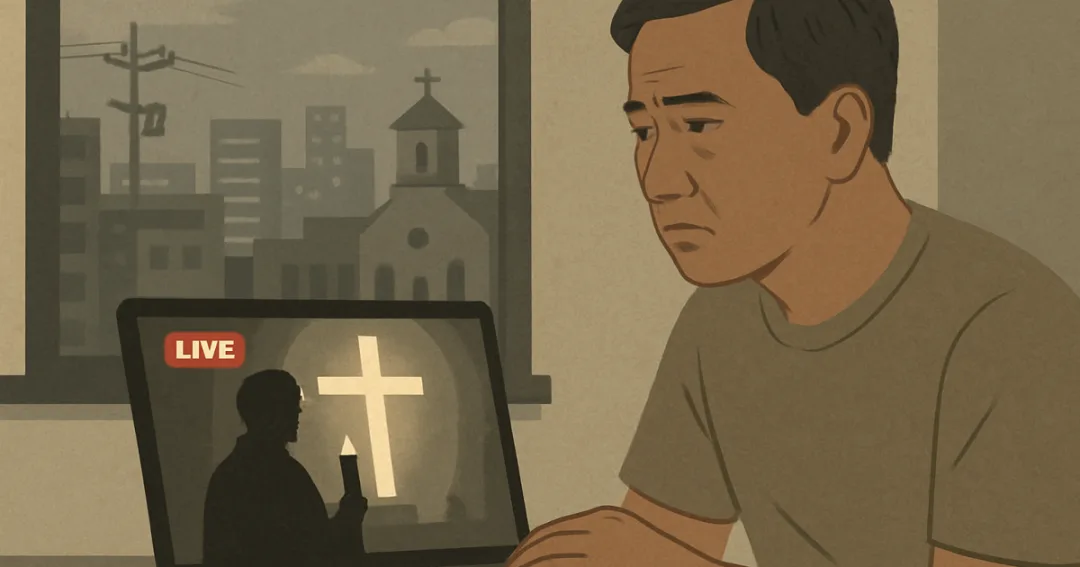
The Easter Vigil, observed on the evening of Black Saturday and leading into Easter Sunday, is one of the most solemn and symbolically rich liturgies in the Christian calendar. In 2026, as in recent years, many communities will not only gather in churches but also turn to livestreams to participate in this central moment of the liturgical year. This shift to digital participation is no longer a mere contingency plan; it has become a regular feature of religious life. The image of a darkened church slowly filling with candlelight now has a parallel in the glow of phone and laptop screens in homes around the world. The question facing both institutions and believers is what it means when a vigil rooted in physical presence and shared silence is increasingly mediated through cameras, microphones, and online platforms.
Historically, the Easter Vigil has been a carefully choreographed encounter with themes of waiting, absence, and hope. Black Saturday, situated between the sorrow of Good Friday and the joy of Easter Sunday, has traditionally been a day of quiet reflection and liturgical minimalism. The vigil that follows, with its readings, blessings, and symbols of situation and water, invites participants into a narrative of death and new life. When this experience is livestreamed, it inevitably changes the way people encounter that narrative. Viewers may pause, rewind, comment, or multitask—actions unthinkable in a church pew, yet now part of how many people “attend” religious events.
The rise of livestreamed vigils raises questions about community, presence, and participation. On the one hand, online access allows those who are homebound, travelling, or distant from their local communities to join a celebration they might otherwise miss. It can reconnect people who feel estranged from formal institutions but remain curious or spiritually searching. On the other hand, there is a risk that religious practice becomes one more item in a digital content feed, consumed passively and quickly displaced by the next notification. The challenge lies in ensuring that livestreams foster genuine engagement rather than reducing the vigil to a spectacle watched from a distance.
Institutions that offer these broadcasts are still learning how to balance reverence with accessibility. Some adopt minimal on-screen elements, seeking to preserve a sense of contemplative distance; others add subtitles, guides, or commentary to help viewers follow the complex liturgy. There is no single correct approach, but the choices made will shape how future generations understand the Easter Vigil. Over time, people may come to expect that every significant religious event is available on demand, just as they expect news or entertainment to be. This expectation could encourage institutions to think more intentionally about digital reverence—how to convey silence, mystery, and communal prayer through a medium designed for speed and stimulation.
As Black Saturday 2026 approaches, the growing normalisation of livestreamed Easter Vigils invites a broader reflection on how faith traditions adapt without losing their core. The digital turn need not be seen only as a loss of depth or as a threat to established practice; it can also be an opportunity to reach those who stand at the margins of physical communities. Yet the enduring power of the vigil has always rested less on production quality than on interior readiness and shared meaning. Whether in a crowded church or in a quiet living room before a screen, the invitation is the same: to pause, to listen, and to consider what renewal might look like in one’s own life and society. The real test of these online