MARCOS SIGNS P6.793 TRILLION NATIONAL BUDGET FOR 2026
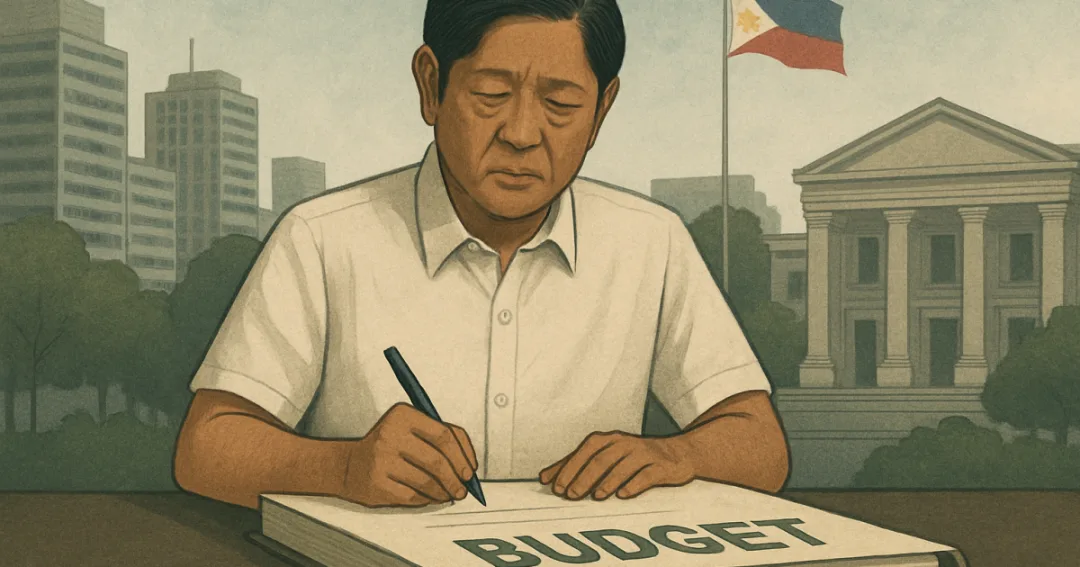
The signing of the P6.793 trillion national budget for 2026 marks another turning point in the country’s effort to balance development needs with fiscal constraints. A figure of this scale immediately raises questions about priorities: where the money will go, who will benefit most, and how effectively it will be spent. For citizens, the budget is not an abstract document but a reflection of government’s concrete choices on services, infrastructure, and social protection. It is also a signal to businesses, investors, and development partners about the policy direction the country intends to take in the coming year.
Placed in broader context, a budget of this magnitude continues the trend of expansive public spending that has characterized recent administrations, especially in the wake of the pandemic. Governments across the world have leaned on public expenditure to sustain growth, address inequality, and modernize infrastructure. In the Philippine setting, this has often meant large allocations for public works, education, health, and social welfare, alongside efforts to improve digital and physical connectivity. Yet, as budgets grow larger, so does the responsibility to ensure that each peso is matched with measurable outcomes rather than merely absorbed by existing bureaucratic structures.
The central tension in any national budget lies between ambition and sustainability. On one hand, there is a clear need to invest in long-term drivers of growth: human capital, climate resilience, and innovation. On the other, there are constraints related to revenue collection, debt servicing, and the limited capacity of institutions to implement projects efficiently. A budget in the multi-trillion range intensifies scrutiny of how much is devoted to productive investment versus routine consumption, and whether fiscal space is being preserved for unforeseen shocks, such as natural disasters or global economic downturns.
Equally important is the process by which the budget was scrutinized, amended, and ultimately approved. The credibility of any spending plan depends not only on what is written in the final law, but on the quality of deliberation that preceded it. Transparent debates, accessible documentation, and clear justifications for major allocations help build public trust and encourage civic engagement. Citizens may not follow every technical detail, but they can reasonably expect that the budget reflects a coherent strategy rather than a collection of short-term political accommodations.
As the 2026 budget moves from paper to implementation, the real test will be in execution, monitoring, and accountability. Institutions tasked with delivering services and projects must be evaluated not only on disbursement rates, but on concrete improvements in people’s lives. Oversight bodies, independent analysts, and the public will need to pay sustained attention to whether promised programs actually materialize and whether they address persistent gaps in opportunity and welfare. The signing of the budget closes one chapter in the policy cycle, but it should also open a more demanding phase of performance assessment—one that determines whether this record allocation becomes a catalyst for inclusive progress or merely another large number in the nation’s fiscal history.

![[Lente | Update] First Voter Education Rollout For The 2026 Barmm Elections!](https://tarana360.com/articles/images/2026-04/lente-update-first-voter-education-rollout-for-the-2026-barmm-elections-1080.webp)