SARA DUTERTE’S IMPEACHMENT THROUGH A MINDANAO LENS
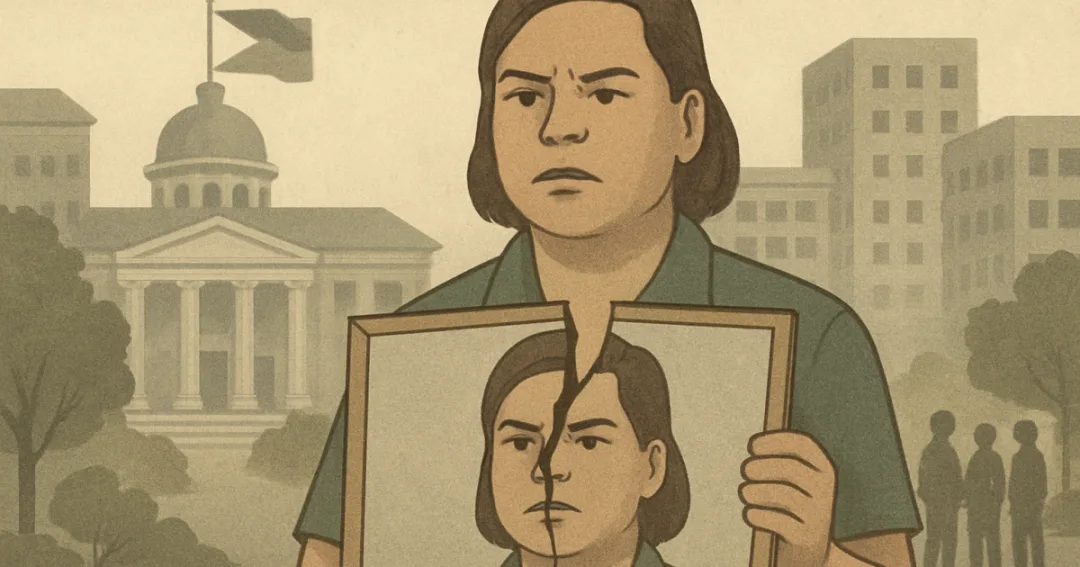
The impeachment drive against Vice President Sara Duterte is not only a test of national institutions; it is also a moment of quiet reckoning for Mindanao. For many in the south, her rise to national office symbolised both continuity and aspiration: continuity of a powerful political dynasty, but also the aspiration that Mindanao’s long-marginalised regions could finally claim a more central voice in Manila. An impeachment process directed at a leader with deep roots in Davao inevitably stirs questions about how Mindanaoan power is perceived and contested in the capital. It also forces a re-examination of whether the political gains of Mindanao over the past decade were structural and lasting, or merely tied to the fortunes of a single family. The outcome, whatever it may be, will reverberate beyond personalities and into the broader story of representation from the periphery.
To view the issue through a Mindanao lens is to recall how recent the region’s ascent in national politics actually is. For decades, Mindanao was largely framed in national discourse through conflict, underdevelopment, and security concerns, rather than leadership or policymaking. The election of a president from Davao, followed by a vice president from the same political lineage, briefly inverted that narrative. Yet this prominence did not automatically translate into a coherent “Mindanao agenda” that transcended clan interests and partisan loyalties. As impeachment proceedings move forward, many Mindanaoans are likely asking whether their region’s visibility was ever truly institutional, or simply contingent on the electoral success of a few powerful actors.
The institutional process itself will be watched closely in Mindanao for signals about fairness and balance. Supporters of the vice president may see the case as politically motivated, while critics may frame it as a necessary assertion of accountability; both narratives will find receptive audiences in the south. What will matter most for regional trust is whether the proceedings are perceived as grounded in clear rules, transparent standards, and consistent application, rather than in shifting political alliances. If the process appears selective or vindictive, it could deepen long-standing feelings in Mindanao that national politics is stacked against leaders from outside the traditional power centres. Conversely, a process seen as measured and principled could reinforce the idea that Mindanaoan leaders, like all public officials, are fully part of a shared constitutional order.
Beyond the fate of one official, the impeachment debate exposes an unresolved tension in Mindanao’s political identity. On one hand, there is a strong desire for regional pride and solidarity, especially when a Mindanaoan figure is perceived to be under siege. On the other hand, there is growing fatigue with personality-based politics and the sense that local concerns—such as basic services, livelihoods, and peace dividends—often get overshadowed by elite rivalries. Civil society groups, faith communities, and local media in Mindanao have gradually been building a more issue-based public discourse, and their responses to the impeachment will influence whether this moment becomes another episode of personality politics or an opportunity for deeper civic reflection. The region’s reaction will help define what it means, in practice, to support Mindanao: defending individuals at all costs, or insisting on higher standards for all who claim to speak in its name.
Ultimately, the impeachment of a Mindanaoan vice president invites the region to think beyond the symbolism of having one of its own at the top. Representation is meaningful only if it leads to more inclusive institutions, more responsive governance, and more durable peace and