NOMAD VERSES | TANAMAN SA KAHAW-ANG
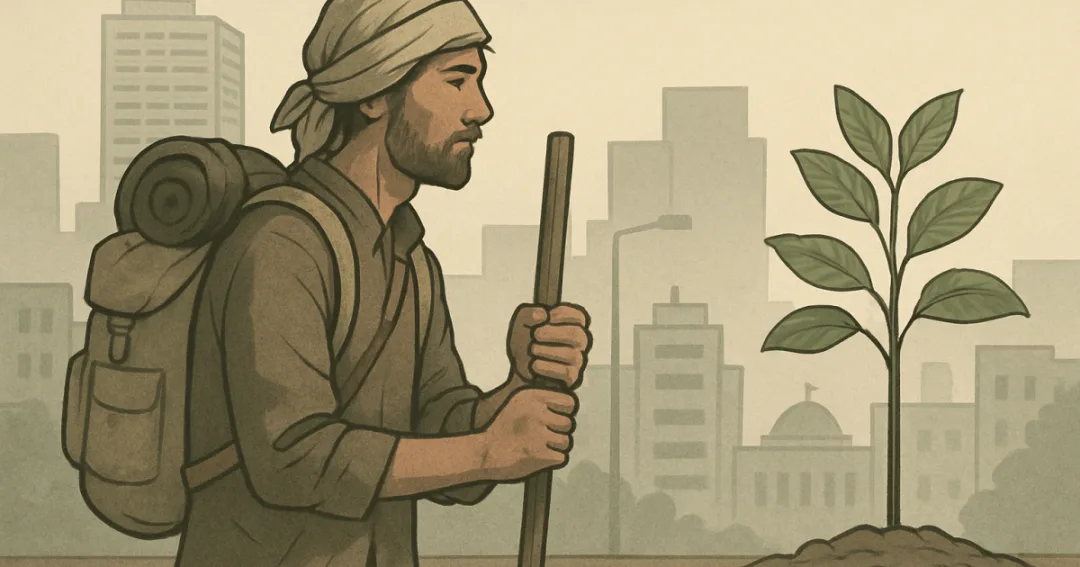
“Nomad Verses | Tanaman Sa Kahaw-Ang” evokes two powerful images that increasingly define contemporary cultural life: the restless movement of people and ideas, and the fragile rootedness of communities and memory. The notion of the “nomad” suggests mobility, dislocation, and the constant rewriting of one’s place in the world. “Tanaman Sa Kahaw-Ang,” by contrast, conjures the act of planting in emptiness or in a clearing, implying both vulnerability and possibility. Together, these concepts frame a tension that many societies face today: how to honor local narratives and indigenous sensibilities while navigating the fluid, borderless landscapes of digital culture, migration, and global exchange. It is a tension that matters because it shapes not only identity, but also how communities imagine their future.
Across regions and generations, poetry and storytelling have long served as tools for negotiating such tensions. Oral traditions, folk epics, and local songs once provided the main vessels for expressing displacement, loss, and renewal. In the contemporary era, that role has expanded to include hybrid forms—spoken word, multimedia performances, and online literary projects—that travel faster and farther than ever before. The “nomad” in literature is no longer only the migrant worker or the exile; it is also the reader who scrolls through verses on a screen, moving from one cultural reference to another in seconds. When creative work like “Nomad Verses | Tanaman Sa Kahaw-Ang” emerges, it participates in this long lineage while also testing how far language can stretch without losing its roots.
The image of planting in emptiness is especially resonant in societies where rural life, indigenous knowledge, and environmental memory are under pressure. In many places, younger generations grow up at a distance from ancestral lands, learning about them through stories rather than daily practice. Poetic projects that speak of planting, clearing, and tending can thus become symbolic acts of reclamation, even when they unfold in urban spaces or digital platforms. They remind audiences that to be “nomadic” need not mean being unmoored from history; rather, it can mean carrying seeds—of language, ritual, and ethical memory—into new terrains. The creative tension lies in ensuring that these transplanted seeds are not reduced to mere aesthetic motifs, but remain connected to lived struggles and responsibilities.
The public relevance of such work extends beyond literary appreciation. When communities see their landscapes, languages, and displacements rendered thoughtfully in verse, it can influence how they engage with broader debates on development, heritage, and social change. Cultural institutions, educational settings, and local initiatives can use these artistic explorations as entry points for dialogue about land use, cultural preservation, and the rights of mobile and marginalized populations. At the same time, there is a risk that the language of “nomadism” and “planting in emptiness” becomes detached from the material realities of inequality and ecological strain. Editorial reflection, criticism, and careful curation therefore play an important role in keeping the conversation grounded.
Looking ahead, the challenge is not to resolve the tension between movement and rootedness, but to inhabit it with greater clarity and care. Works like “Nomad Verses | Tanaman Sa Kahaw-Ang” suggest that it is possible to craft spaces—on the page, onstage, or online—where itinerant lives and fragile soils are both taken seriously. If readers, creators, and institutions