AS GARBAGE PILES UP, DAVAO CONFRONTS DEEPER WASTE MANAGEMENT PROBLEMS
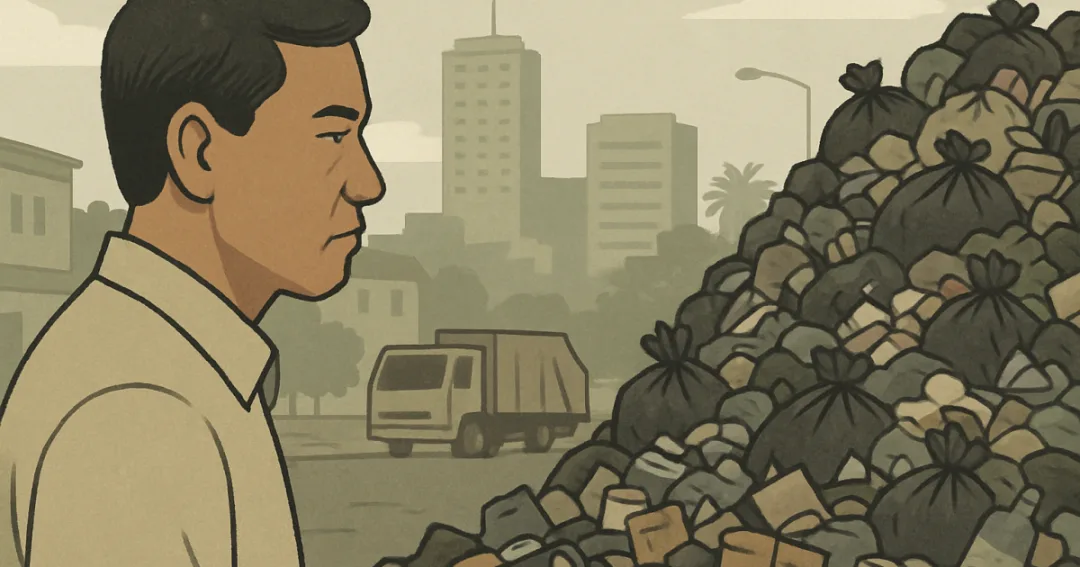
As piles of uncollected garbage become more visible in parts of Davao, the immediate reaction is often frustration about disrupted collection schedules or overflowing bins. Yet the sight of mounting waste is less a sudden crisis than a symptom of deeper structural problems in how the city manages what it throws away. Rapid urbanization, changing consumption patterns, and limited landfill capacity are converging in ways that simple adjustments to collection routes cannot resolve. When trash remains on the streets, it exposes gaps not only in logistics, but also in planning, enforcement, and public behavior. The challenge, therefore, is not merely to remove the visible piles, but to confront the underlying system that allowed them to accumulate.
Davao has long been held up as a relatively orderly and disciplined urban center, which makes its current waste management strains particularly instructive. Like many growing cities, it has relied heavily on landfilling as the primary destination for municipal solid waste, even as authorities have encouraged segregation and recycling in principle. Over time, this model becomes harder to sustain as land becomes scarcer, waste volumes increase, and environmental standards tighten. Informal recycling and small-scale composting exist, but they are often fragmented and insufficiently integrated into formal systems. The result is a familiar pattern: ambitious policies on paper, lagging implementation on the ground, and residents caught in the gap between expectation and reality.
The implications of these shortcomings extend beyond aesthetics or convenience. Poorly managed waste can clog drainage systems, worsen flooding, and contribute to health risks in densely populated communities. It can undermine tourism and investment by eroding the city’s reputation for cleanliness and order. When residents see garbage piling up despite their own efforts to comply with rules, trust in public institutions can weaken, and compliance may decline further. In this way, waste management becomes a governance issue, testing the capacity of authorities to coordinate agencies, enforce regulations fairly, and engage citizens in a shared responsibility.
Addressing Davao’s deeper waste problems will require more than additional trucks or stricter penalties. It calls for a clearer shift from a “collect and dump” mindset to one that prioritizes reduction, segregation at source, and resource recovery. This includes supporting systems that make it easier for households and businesses to separate recyclables and organics, and ensuring that these separated materials are actually processed as intended. It also means reviewing how contracts, budgets, and performance metrics for waste services are structured, so that they reward long-term sustainability rather than short-term volume handling. Public education campaigns can help, but they must be matched by visible, reliable systems that show residents their efforts are not in vain.
As Davao confronts its growing garbage problem, it has an opportunity to redefine what responsible urban management looks like in a rapidly developing city. The current discomfort can serve as a catalyst for more honest conversations about consumption, accountability, and the real costs of a throwaway culture. If the city can move from reactive clean-ups to a more coherent, preventive strategy, it may again become a reference point—this time for modern, resilient waste governance. The alternative is to treat each wave of piled-up trash as an isolated incident, allowing the same structural weaknesses to resurface in different forms. The choice, ultimately, is whether to see the garbage as merely something to hide, or as a visible reminder of the systems that must be rebuilt.